Stoneflies: Big Bugs, Big Fish, Big Drama
The hatch that stops traffic — sometimes literally.
The Stonefly Situation
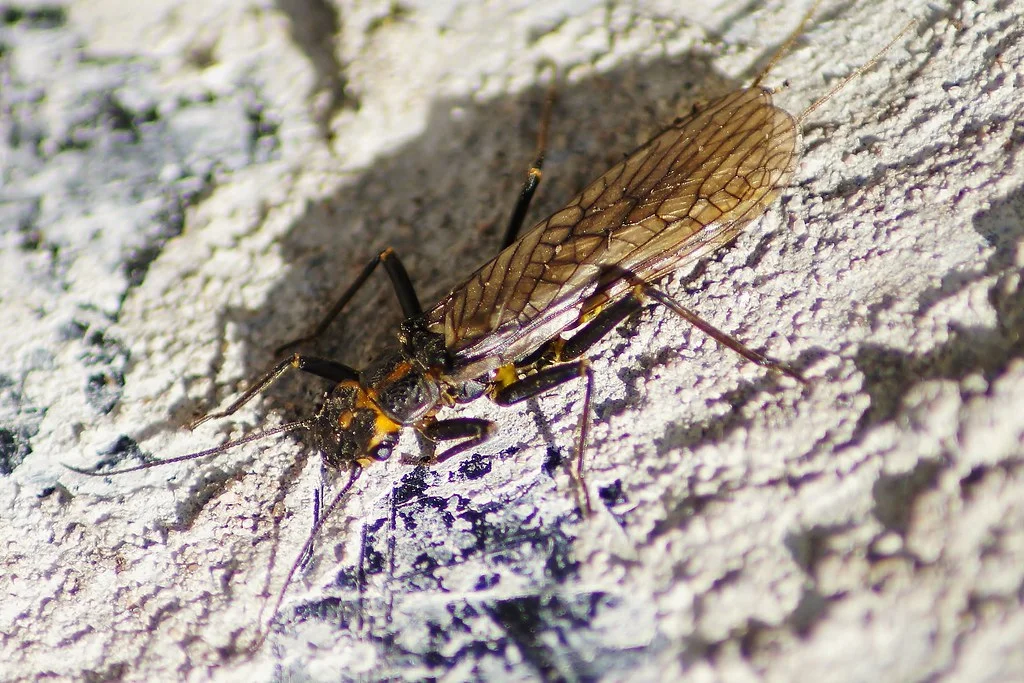
Stoneflies are not subtle. The largest species — Salmonflies and Golden Stones — are as big as some birds by aquatic insect standards, clinging to streamside willows in numbers that make them impossible to ignore. During a major stonefly hatch on a Western river, it's not unusual to find them landing on your hat, your rod, your lunch. The fish notice too.
Stoneflies are indicators of water quality: they require clean, well-oxygenated water to thrive, which means their presence in a river is a good sign about the river's health. They're most abundant in fast, rocky freestone streams — the kind of water that looks like it should hold big trout, and usually does.
The Life Cycle
The Nymph
Stonefly nymphs live on the stream bottom for one to three years, depending on species. They're crawlers, not swimmers — they move over and under rocks rather than swimming through the water column. A large black stonefly nymph drifted deep through a fast run is one of the most consistently productive flies you can fish on freestone water throughout the year, well outside of hatch season.
The Emergence
Stoneflies don't hatch on the water. Instead, mature nymphs crawl out of the river onto rocks, logs, and bankside vegetation, where they split their shucks and emerge as adults. What there is, however, is a significant nymph migration to the banks — which concentrates fish in the shallows and makes them aggressive.
The Adult
Adult stoneflies are clumsy fliers. They clatter around streamside vegetation, fall onto the water, and get eaten. Big dry flies — Stimulators, Sofa Pillows, Chubby Chernobyl-style foam flies — fished along banks and beneath overhanging vegetation during a major stonefly hatch produce some of the most explosive dry fly fishing possible. The takes are not subtle.
Key Stoneflies to Know
Salmonfly (Pteronarcys californica)
The biggest and most famous. Size 4-6, bright orange abdomen. Hatches on major Western rivers typically in late May to early June, moving upstream as water temperatures rise. Draws crowds of anglers and, more importantly, every large trout in the river.
Golden Stonefly (Hesperoperla pacifica and others)
Slightly smaller than Salmonflies (size 6-10), yellow-gold coloring. Often produces better dry fly fishing because there are more of them over a longer period.
Yellow Sallies (Isoperla spp.)
Small (size 12-16), pale yellow. Summer stoneflies that hatch through much of the season. Often overlooked but consistently present and worth having in the box.
Little Brown Stoneflies (Amphinemura spp.)
Very early season, small (size 16-18), dark brown. Sometimes the only thing hatching in late winter/early spring. Important on tailwaters and spring creeks.
Practical Notes
Stonefly nymphs fish well all year, not just during hatch season. A big, heavy nymph in black or brown drifted deep is effective in fast water any month.
During a Salmonfly hatch, fish the banks. Cast to the edges, under overhanging willows, into slack pockets near the bank.
Big dry flies in foam (Chernobyls, Turk's Tarantulas) float better than traditional feather patterns and can sustain a sloppy presentation.
The hatch 'moves' upstream as water warms — if you miss it on the lower river, it may still be happening 30 miles upstream.
Recommended fly patterns
Stoneflies crawl to the bank to emerge, so you'll often fish nymphs deep, then adults on the surface.
- Nymph: 20 Incher
- Emerger (film / swing): 20 Incher — same pattern shallow or with a swing toward banks during the migration.
- Dry: Rogue Foam Stone