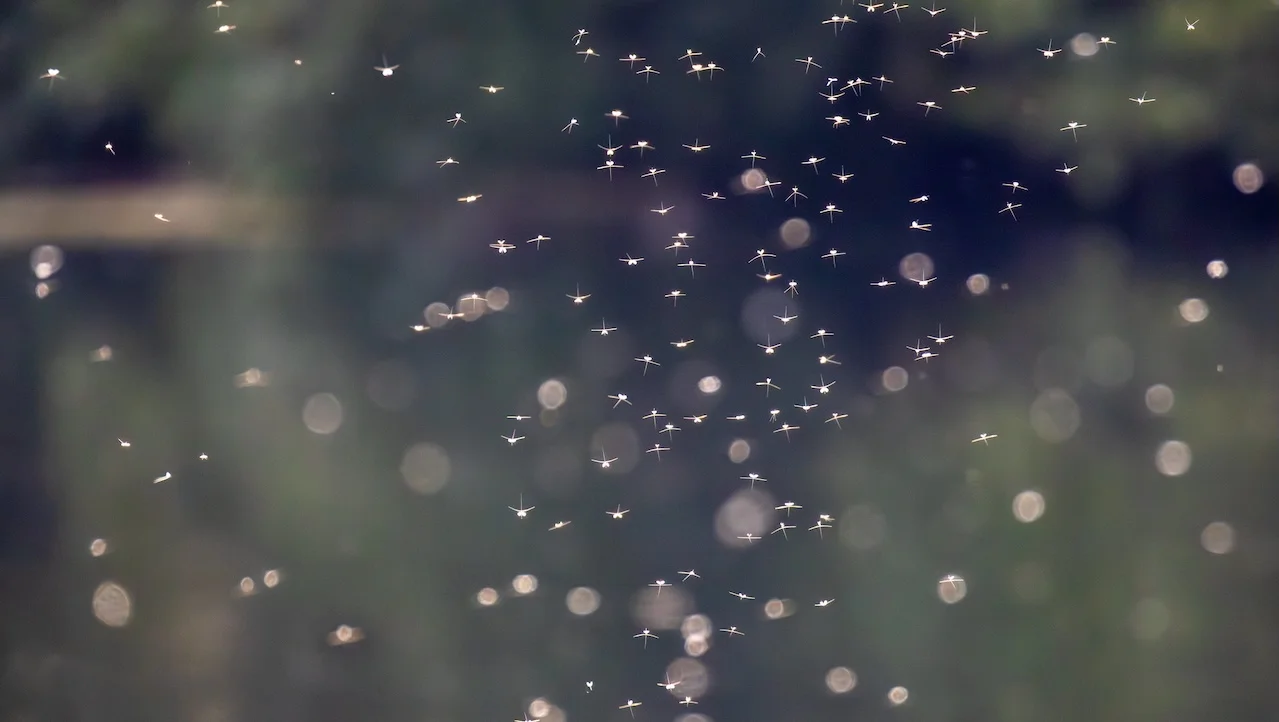
Insects
The Foundation: Aquatic Insects
Aquatic insects are the primary food source for trout in most rivers and streams, by volume and by frequency. They're not the whole story, but they're the center of it, and no piece of knowledge will serve you better than a solid understanding of the four main insect orders.
Mayflies (Order Ephemeroptera) are the canonical fly fishing insect — the one most anglers picture when they think "matching the hatch." They go through incomplete metamorphosis: egg, nymph, dun (the winged adult that emerges on the surface), and spinner (the mated adult that returns to the water to die). Trout eat them at every stage, and selective feeding on a specific mayfly stage in clear water is the technical dry fly fishing situation that makes people buy expensive rods.
Caddisflies (Order Trichoptera) are underrated by beginners and well-loved by experienced anglers. They go through complete metamorphosis — larva (which builds cases of sand, gravel, or sticks on the stream bottom), pupa (which rises to the surface to emerge), and adult. The pupal emergence is often explosive and chaotic, with fish crashing the surface in a way that looks nothing like the sipping rises of a mayfly hatch.
Stoneflies (Order Plecoptera) tend to be big — some species are among the largest aquatic insects around — and they're important in fast, high-gradient freestone streams. The giant Salmonfly hatch on Western rivers in late spring draws trout (and anglers) out in force. Unlike mayflies and caddis, most stoneflies crawl to streamside rocks to emerge rather than hatching on the water.
Midges (Order Diptera) are small, often very small, and dismissed by anglers who haven't suffered through a technical midge situation. They hatch year-round — including in winter when nothing else is going on — and in tailwaters and spring creeks they can be the primary food source for months at a stretch.
Tricos deserve their own mention despite being a mayfly. Tricorythodes are tiny (size 18 to 24) but hatch in massive numbers on warm summer mornings, often producing some of the most technical and frustrating dry fly fishing of the year.
→ Deep dives: Mayflies, Caddisflies, Stoneflies, Midges, Tricos