Caddisflies: The Hatch Nobody Talks About Enough
Abundant, widespread, and responsible for some of the most exciting evening fishing of the year.
The Underrated Hatch
Caddisflies don't get the reverent treatment that mayflies do, which is a little unfair. They're often more abundant than mayflies, they hatch across a longer season, and they produce some of the most aggressive, high-energy feeding you'll see on trout water. If you've ever watched fish crashing the surface in a chaotic evening rise that didn't respond to any dry fly you tried, there's a reasonable chance caddis were involved.
The Life Cycle
The Larva
Caddis larvae live on the streambed and are famous for building protective cases out of whatever's handy — sand grains, gravel, sticks, leaf fragments. They're available to trout year-round on the bottom, and nymph imitations (soft-hackles, caddis larva patterns in green, tan, or cream) work consistently.
The Pupa
When it's time to hatch, the larva seals its case and pupates inside. The pupa then cuts free and rises — sometimes rapidly — toward the surface to emerge. This rising pupa is often the most heavily eaten stage during a hatch. Fish the pupa on a swing or with a lift: cast across current, let the fly sink, then swing it up through the water column mimicking the naturals.
The Adult
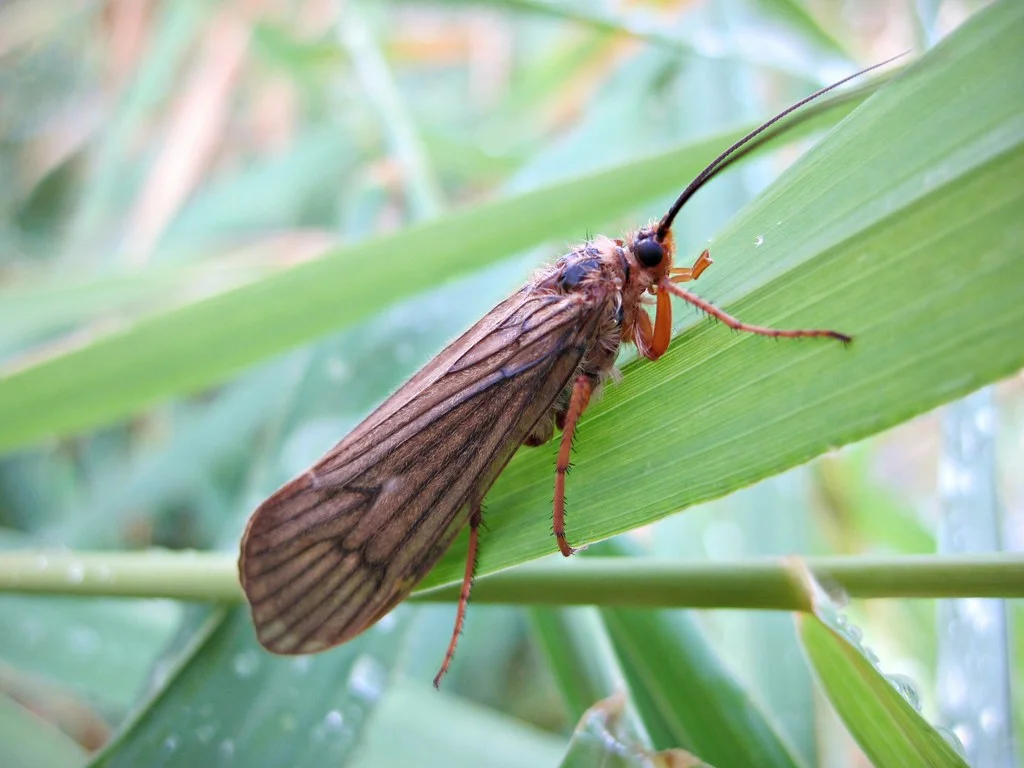
Caddis adults are tent-winged and often skitter or flutter on the surface before taking flight. This movement triggers aggressive rises — fish smashing at fleeing caddis rather than delicately sipping. An Elk Hair Caddis fished with a slight drag — a controlled skitter, not an accidental one — can be deadly when adults are present.
The Egg Layer
Many caddis females return to the water to deposit eggs, diving or dragging their abdomens in the current. This brings them back to the surface and triggers another feeding opportunity, often in the last light of evening.
Key Caddis to Know
Little Black Caddis (Chimarra spp.)
Early season, often the first hatch of spring in many rivers. Small (sizes 16-18), dark. Triggers fish that haven't seen much surface action since fall.
Spotted Sedge (Hydropsyche spp.)
One of the most common caddis across North America. Summer emergence, sizes 12-16, tan or olive. If there's a caddis hatch happening and you're not sure what it is, start here.
Grannom Caddis (Brachycentrus spp.)
So named because it often peaks around early May in Rocky Mountain rivers. One of the major events of the spring fishing calendar.
October Caddis (Dicosmoecus spp.)
Late summer and fall, big (size 8-10), orange-brown. Worth knowing for late-season fishing on freestone streams.
Practical Notes
If an evening rise isn't responding to dries, try swinging a soft-hackle on the dangle — fish may be eating pupae just under the surface.
A slight skitter on an Elk Hair Caddis often outperforms a dead drift when adults are present.
Caddis are less stage-sensitive than mayflies for most anglers. An adult imitation in the right size often covers the pupa rise as well.
Carry caddis in tan/olive and dark brown/black across sizes 12-18 and you'll cover most situations.
Recommended fly patterns
Each will also have a fly tying recipe.
- Nymph / larva: Electric Caddis
- Emerger / pupa: Bird of Prey
- Dry: Puterbaugh Foam Body Caddis