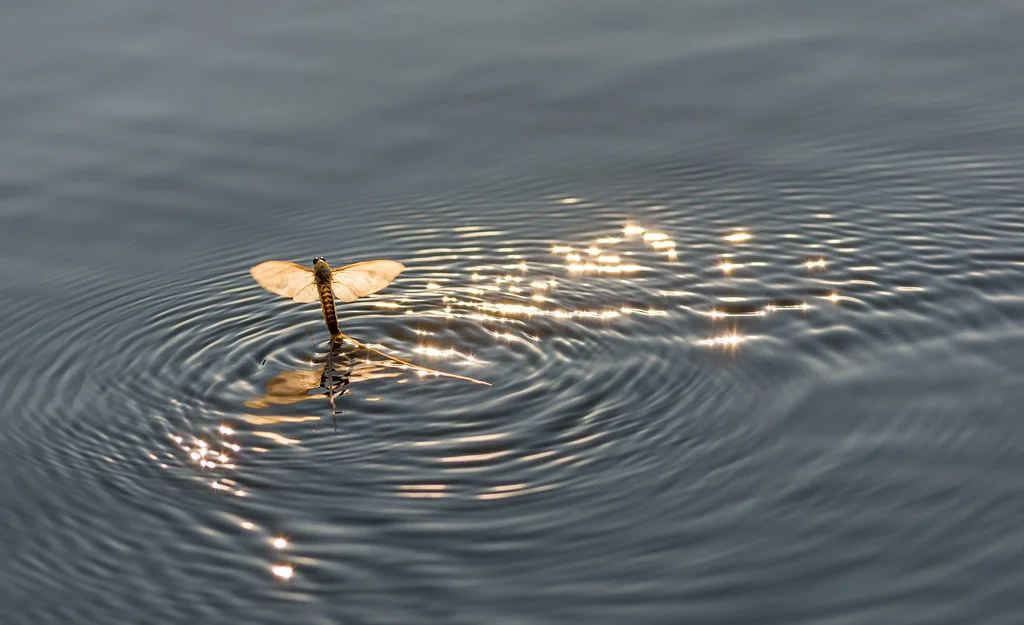
Mayflies: The Fly Fishing Insect
They've inspired more fly patterns, more arguments, and more blown presentations than any other creature on the water.
Why Mayflies Matter
If fly fishing has a mascot, it's the mayfly. They remain the most technically demanding hatch to fish effectively. Understanding them well will make you a better angler in almost every situation.
Mayflies go through four distinct life stages, and trout eat them at every one. Getting the stage right is often more important than getting the species right.
The Life Cycle, and Why It Matters
The Nymph
Mayfly nymphs live on the riverbed for most of their lives — anywhere from a few months to almost two years depending on species. Before emergence, nymphs become active and begin drifting in the current, rising and falling in the water column. This is when trout start feeding on them subsurface, and it can begin hours before any adult is visible on the surface.
If you're arriving for a known hatch and don't see rises yet, start with a nymph — you're probably early, but the fish aren't.
The Emerger
The transition from nymph to winged adult happens at the surface, and it's often the most vulnerable moment of a mayfly's life. The nymph rises to the film and struggles to break through the surface tension, stuck halfway between water and air. Trout eat them here with abandon.
If you're seeing rises but getting refusals on standard dries, switch to an emerger — a comparadun, sparkle dun, or Klinkhammer — and fish it in the film rather than on top of it.
The Dun
The newly hatched adult rides the current surface while its wings dry before flying to streamside vegetation. This is the classic dry fly stage: a winged insect floating helplessly on the water. In technical water, fish can become selective about dun imitations to an absurd degree. Size and silhouette usually matter more than exact color.
The Spinner
Adult mayflies mate in the air, then females return to the water to deposit eggs and die. The spent adults — wings flat on the surface, body flush — are called spinners, and spinner falls can produce extraordinary numbers of rising fish alongside extraordinary frustration.
Watch for fish rising consistently but refusing every dry you throw. Look closely at the water surface in evening light: you may see a film of spent wings that's nearly invisible. Switch to a spinner pattern.
Key Mayfly Species to Know
Blue-Winged Olives (Baetis spp.)
The most important mayfly for most trout anglers. BWOs hatch in spring and fall, often on overcast or rainy days, in sizes 16 to 22. They're the reason experienced anglers sometimes prefer ugly weather — a nasty overcast afternoon in October can produce a BWO hatch and rising fish while everyone else has gone home.
Pale Morning Duns (Ephemerella spp.)
Summer mayflies that hatch in the morning and early afternoon, sizes 14 to 18. Often produce both emerger and dun action, sometimes with spinner falls in the evening. One of the workhorses of Western summer fishing.
Green Drakes (Drunella grandis and others)
Big, dramatic mayflies that produce aggressive rises. The Western Green Drake is one of the most anticipated hatches in Rocky Mountain fishing — typically early summer, afternoon emergence, not subtle.
Tricos (Tricorythodes spp.)
So small they have their own article. Summer morning hatch, spinner fall, technical and maddening. Read the Trico article.
Practical Notes
When in doubt about stage: start with an emerger rather than a dry. Fish eat more emergers than duns during most hatches.
Match size before color. A fly that's two sizes too big will get refused more consistently than one that's slightly off-color.
Observe rise forms: sipping or subtle rises usually mean film-level feeding. Splashy rises more often indicate caddis or active dun eating.
Check streamside vegetation for adults that have already hatched — this tells you size and color even if you can't see what's on the water.
Recommended fly patterns
Each will also have a fly tying recipe.
- Nymph: Bling Midge
- Emerger: Comparadun
- Dry: Brindle Chute Dry