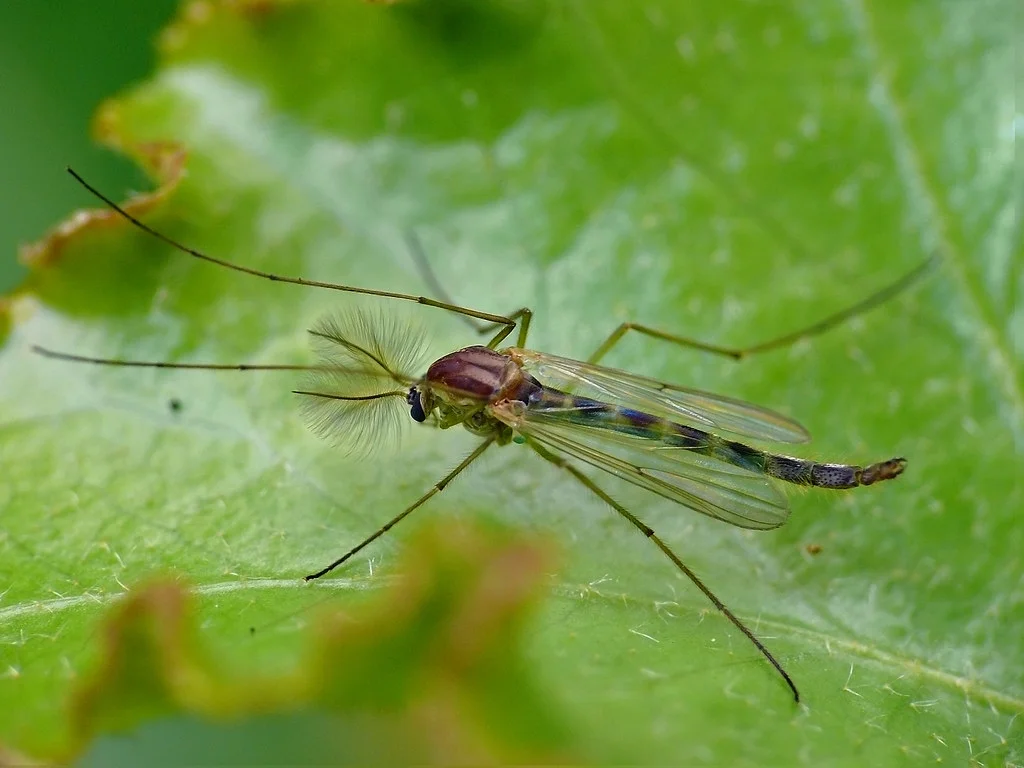
Midges: Small Flies, Big Lessons
Year-round, everywhere, and consistently underestimated.
The Midge Reality
No insect teaches humility to fly fishers quite like the midge. They're tiny — often size 20 or smaller. They hatch constantly, including in winter. They're the primary food source in many tailwaters. And fishing them well requires a level of precision that exposes every weakness in your presentation.
The upside: learning to fish midges will make you better at everything else. The focus on drag-free drifts, tippet diameter, leader length, and accurate reading of rise forms that midge fishing demands will sharpen every aspect of your technical fishing.
The Life Cycle
The Larva
Midge larvae live in the substrate and fine sediment of stream and lake bottoms. They range from cream to red (the "bloodworm" is a midge larva) to dark brown and olive. In tailwaters where the bottom is silty, they can be extraordinarily abundant. Larva imitations — simple, segmented flies in the right color — fish well when nothing is hatching.
The Pupa
The rising pupa is usually the most important stage to imitate during a midge hatch. Pupae cluster in the film before emerging, and fish eat them with deliberate, sipping rises that barely disturb the surface. A Zebra Midge, RS2, or Mercury Midge in the right size fished in or just below the film is the tool.
The Adult
Adult midges cluster on the surface, sometimes in groups large enough to form rafts. "Midge cluster" patterns — a clump of foam or CDC that imitates multiple midges — are often more effective than single-insect imitations because they're more visible and fish are used to eating several at once.
When Midges Matter Most
Winter
This is when midges become the whole show on many rivers. Nothing else is hatching. Water is cold, fish metabolism is slow, but midges hatch even in near-freezing conditions. A midge cluster or small nymph fished slow and deep is often the only productive game.
Tailwaters Year-Round
Tailwater rivers below dams tend to have stable, cold temperatures and fine sediment bottoms that are ideal midge habitat. On rivers like the San Juan in New Mexico or the Bighorn in Montana, midge fishing is relevant every month of the year.
When Nothing Else Is Visible
Even on rivers with strong seasonal hatches, there are many mid-day windows in summer where nothing is hatching and midge clusters in size 20 will continue to pick up fish that nothing else is touching.
Practical Notes
Go lighter on tippet than you think you need to. A size 22 fly on 5X looks wrong. 6X or 7X is right.
Longer leaders — 12 to 14 feet — help with drag-free drifts in slow water.
Watch for 'sipping' rises with barely any surface disturbance. That's a midge-eating fish.
Midge clusters often outperform single patterns. Don't overlook them.
If you're on a tailwater and the fishing is tough, downsize everything before you change location.
Recommended fly patterns
These match what the article calls out for larva, pupa (film), and adults.
- Nymph / larva: Zebra Midge
- Emerger / pupa: RS2
- Dry / cluster: Griffith's Gnat