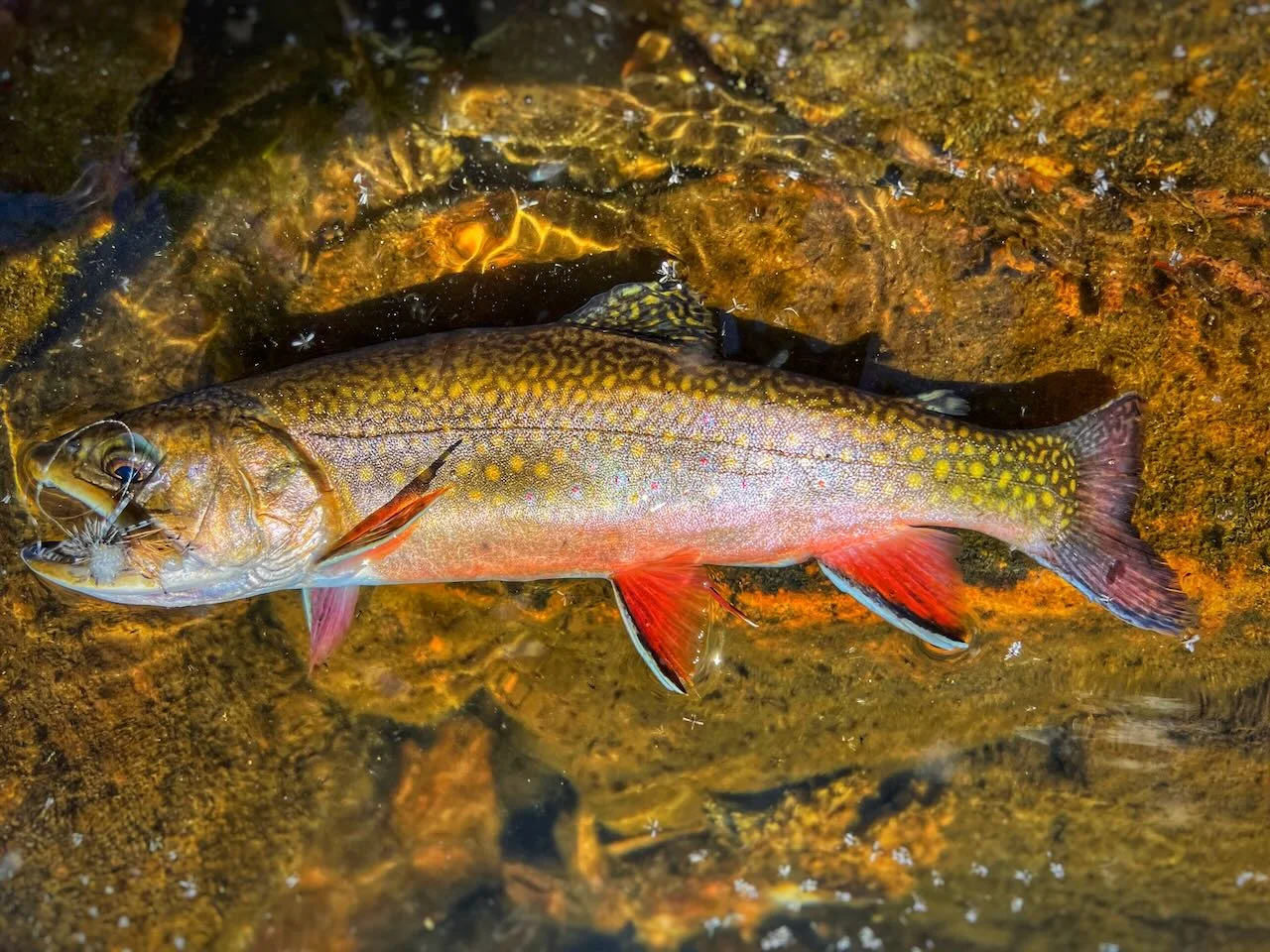
The Confidence Fly
The best fly in your box is the one you believe in.
It's Not in Any Hatch Chart
There's no entomology behind a confidence fly. It doesn't imitate a specific insect at a specific life stage on a specific river. It doesn't appear in the scientific literature on trout feeding behavior. You won't find it listed under "late June PMD emergences" in any regional hatch guide.
What a confidence fly does is simpler and harder to explain: it catches fish because you fish it like it's going to catch fish.
That's not mysticism. It's mechanics.
What Confidence Actually Does
When you genuinely believe a fly is going to work, you fish it differently. The cast lands more precisely because you're not half-committed to the presentation. You mend more deliberately. You let the drift run longer before picking up. You're watching the fly with real attention rather than the distracted attention of someone who suspects they have the wrong pattern and is already mentally reaching for something else.
Trout are not impressed by confidence as a concept. They respond to drag-free drifts, accurate presentations, and flies that land where the fish is actually looking. Confidence produces all three, which is why it produces fish.
Tie on a fly you're not sure about and watch how you fish it. Shorter drifts. Earlier pickups. Halfhearted mends. Two casts to a rising fish instead of six. You're not fishing the fly — you're testing it. That's a different activity with worse results.
How a Fly Becomes a Confidence Fly
It earns the designation the only way it can: by catching fish when it counted.
Usually it's a specific memory. A slow afternoon that turned into a good one when you switched to that pattern. A fish you'd been watching for twenty minutes that finally ate. A stretch of river where nothing was working and that fly produced three fish in an hour. The details vary but the structure is the same — the fly delivered at a moment that mattered, and you filed it away.
After that, the fly carries a different weight in your box. You reach for it with purpose. It gets tied on earlier in the session, before the frustration sets in. And because you fish it better, it tends to confirm its own reputation.
This is a legitimate feedback loop, not a superstition. The fly probably worked that first time because it was the right size, the right silhouette, or the right presentation depth for the conditions. Your confidence in it now causes you to fish it well enough to keep working. The original reason and the psychological reinforcement compound over time.
Every Angler's List Is Different
Ask ten experienced anglers what their confidence fly is and you'll get ten different answers. A guide who fishes the South Platte four days a week will tell you something completely different from the angler who spends three weeks a year on spring creeks in Pennsylvania. A streamer angler's confidence fly looks nothing like a midge fisherman's.
This is the point. A confidence fly is personal. It's built from your specific history on specific water, and it can't be transferred by recommendation. Someone else's confidence fly, fished by you without that history behind it, is just another fly in the rotation.
What you can do is build your own list deliberately. Pay attention to which patterns produce for you across different conditions and different waters. Keep notes — even rough ones — on what worked and when. Over a few seasons you'll start to see which flies appear consistently in your best days. Those are the beginnings of a confidence fly, and you'll recognize them when you see the pattern.
When to Reach for It
The confidence fly earns its keep in two specific situations.
When nothing is happening
No visible hatch, no rising fish, no obvious indication of what to try. This is when most anglers cycle through their box experimenting. The confidence fly is a better starting point than a random selection — not because it's magically effective in all conditions, but because you'll fish it well while you figure out what's actually going on.
When you need to reset
You've been on the water for two hours, tried five different flies, spooked a fish you wanted badly, and the session has gotten into your head. Tie on the confidence fly. Not because it's definitely right, but because fishing something you believe in resets the mental state that's been causing short casts and early pickups. Sometimes that reset is the most productive thing you can do.
The Fly Box Problem
One of the reasons confidence flies matter is that most fly boxes are too full of patterns with no history behind them. Flies bought on recommendation, tied in a burst of winter optimism, grabbed from a bin because they looked good — patterns with no personal track record and therefore no earned trust.
A well-used box isn't necessarily a large box. It's a box where most of the flies have caught fish, and a few of them have caught fish when it really mattered.
IdentaFly's fly database covers thousands of patterns across every category — dries, nymphs, streamers, emergers, terrestrials — organized by hatch, water type, and region. It's a useful resource for finding patterns worth trying on specific water, which is the first step toward building a personal track record with them. A fly you discover through research and then catch fish on becomes yours in the way that matters. The database gives you candidates. The river gives you confidence flies.
A Note on the Workhorses
Some flies become confidence flies for nearly everyone who fishes them long enough. In the fishing community, you will often find these flies as trustworthy over time:
These patterns have broad enough profiles and enough productive history across enough water that they generate confidence through reputation rather than purely personal experience. They're proven in the sense that thousands of anglers across decades have validated them in conditions you haven't fished yet, which is a reasonable basis for trust when you're on unfamiliar water.
Carry them. Fish them when you don't know what else to try. But understand they're a starting point — a floor, not a ceiling. The flies that will serve you best in five years are the ones you're building a personal record with right now, on the specific water you fish, in the conditions you know.
Those won't look like anyone else's list. That's the whole point.