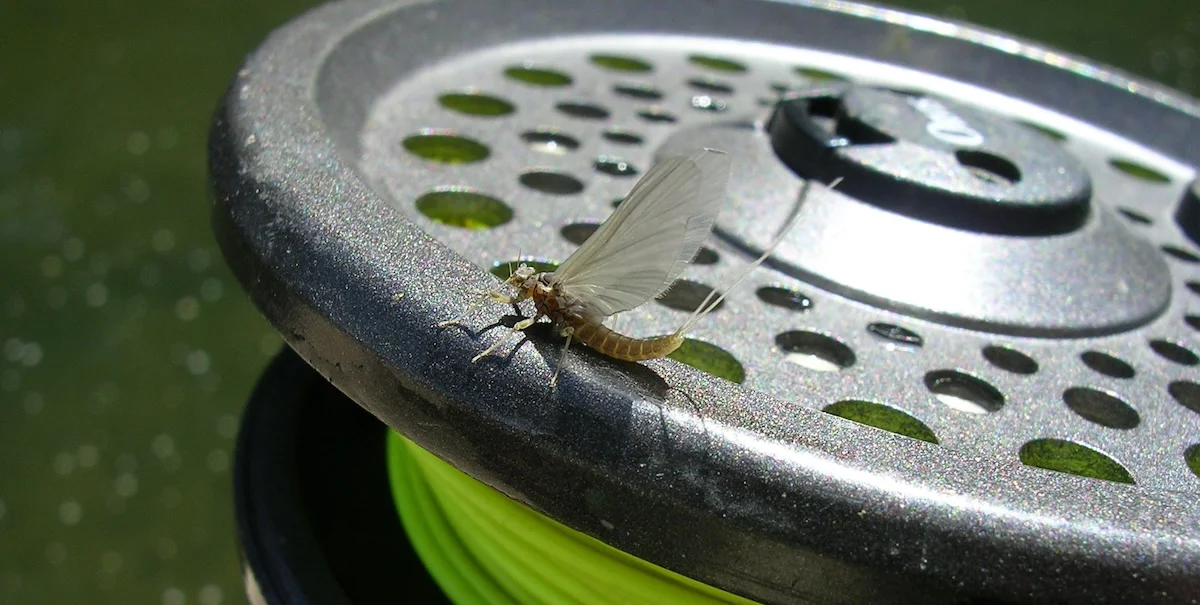
Blue-Winged Olives
When in doubt, it's likely someone will be fishing BWO hatches.
They'll hatch on good and bad weather, early season through fall on tailwaters and freestones.
Species
Hook sizes
Season
The fish are still there
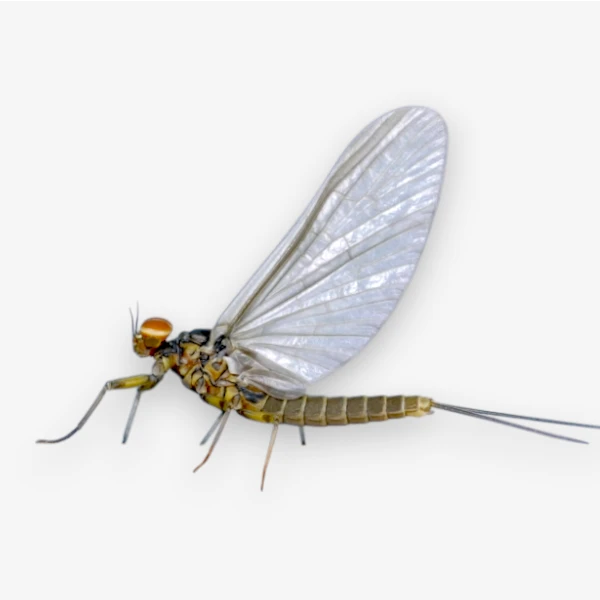
Labor Day comes and goes. The summer crowd leaves. The parking lots at popular access points empty out. Most anglers put their rods away, start thinking about hunting season, and assume the fishing is over.
It isn't.
Blue-Winged Olives — the common name for Baetis — are a two-season insect. They hatch in early spring before most people start fishing and again in fall after most people have stopped. Both windows produce some of the most consistent dry fly fishing of the year, largely unpressured, on rivers that were crowded all summer. The fish are still feeding. The hatches are still happening. There's just nobody there.
The catch is weather. BWOs perform best in conditions that send everyone else indoors — overcast, cool, damp, occasionally miserable. Learning to read a gray October forecast as an invitation rather than a reason to stay home is one of the more useful adjustments an angler can make.
→ For Baetis biology, life cycle stages, and nymph identification, see the Mayfly article in What Fish Eat.
Clouds and low pressure mean good fishing
The connection between overcast conditions and BWO hatches is real and consistent enough that experienced anglers plan around it deliberately. The mechanism isn't fully understood — light intensity, barometric pressure, humidity, and temperature all likely play a role — but the pattern holds across rivers and regions: BWOs hatch most heavily on days that look like they shouldn't be worth fishing.
Bright, sunny, high-pressure days in October can produce scattered BWO activity. A cold front moving through, dropping temperatures, sky going gray and flat — that's a BWO day. A steady drizzle with temperatures in the low 50s and no wind is close to ideal. If you're checking the forecast and thinking "that looks unpleasant," check your fly box for size 18-20 olive patterns before you make other plans.
On warm, sunny fall afternoons BWOs may not appear at all, or only in thin numbers that don't trigger sustained surface feeding. Don't mistake a bluebird day for a good dry fly day in September and October. It often isn't.
Spring vs. fall
BWOs are not exactly the same hatch in spring and fall. The timing, the water conditions, and the fish behavior differ enough that it's worth thinking about them separately.
Spring BWOs
Typically begin in late February or March on lower-elevation tailwaters and spring-fed streams, extending into April and May as the season warms. This is often the first dry fly opportunity of the year — fish that haven't seen a surface fly in months, actively feeding on the first consistent hatch. Spring BWOs tend to be slightly larger than fall populations on the same water, sizes 16 to 18 being common.
Water is frequently running high and cold in early spring, which concentrates fish in slower, deeper lies. Some days fish eat BWOs subsurface through the whole emergence, never committing to the surface film. A BWO nymph or soft hackle is often more productive than a dry in early March even when you can see adult insects on the water.
Fall BWOs
The better-known event, and deservedly. September and October hatches on quality tailwaters produce consistent surface feeding — fish up, rising rhythmically, in accessible lies — that dry fly anglers spend all summer waiting for. The fish are active, water temperatures are back in a comfortable range, and the hatches often run longer than their spring counterparts.
Fall BWOs also run smaller on many waters. Size 20 and 22 are not unusual in October, which requires lighter tippet and more precise presentations than a size 16 spring pattern. The fish are not more selective in fall — they're eating aggressively — but the smaller flies demand more from the angler.
Where to go
Tailwaters and spring-fed stretches shine for spring and fall Baetis; overcast days beat bluebird afternoons.
Colorado
When
March-May, September-November
Notes
Technical tailwater; Cheesman is walk-in canyon; Deckers more accessible.
Colorado
When
Spring and fall
Notes
Regulated flows; cold clear water; flat sections below dam fish well in fall.
Montana
Montana
When
Spring and fall; Sept-Oct best
Notes
Year-round fishery; fall Baetis emergence — most consistent surface feeding of the year.
Montana
When
September-October
Notes
Post-summer; crowds gone; fish aggressive; overcast afternoons in fall.
Montana
When
September-October
Notes
Long flat stretches; dense Baetis populations; pressure drops sharply after Labor Day.
Pennsylvania
Pennsylvania
When
mid March to April, September into October
Notes
This limestone river is known for BWO fishing.
Pennsylvania
When
Spring and fall
Notes
very dependant on water temps and cloudy conditions
Check out Mountain Laurel Guide Service, who has tons of knowledge on the Clarion & Little J.
How to fish it
Time the afternoon window
BWO hatches in both spring and fall tend to peak in the warmest part of the day — which in October means early-to-mid afternoon rather than morning. Get to the river around noon, set up, and be ready when the light goes flat and temperature drops slightly in the early afternoon. Don't rush to the river at dawn for a fall BWO hatch.
Fish the film
BWO rise forms are often subtle — a quiet sip, a deliberate head-and-tail, the kind of disturbance that's easy to miss from a distance. Watch carefully before assuming fish aren't rising. A comparadun or CDC pattern that sits flush in the film will frequently outperform a high-riding parachute. The fish are eating insects transitioning through the surface, not adults sitting on top of it.
Go smaller than feels right
Size 20 is appropriate on most fall BWO water. Size 22 is not unusual. Anglers who fish spring BWOs at size 16 and don't adjust downward for fall leave fish on the table. Carry both and be willing to go smaller if refusals continue after good presentations.
Longer leaders, lighter tippet
Flat tailwater in fall demands a 12-foot leader minimum and 6X tippet as a starting point. 7X if fish are refusing good presentations. Use good tippet, land fish quickly, and don't let concern about breaking off push you heavier than the water demands.
Stay late
BWO hatches in fall can run into the early evening, and spinner falls of spent Baetis sometimes produce surface feeding after the main emergence has wound down. The fish still rising at 5 PM on an October afternoon are often the largest ones, eating spent spinners in flat tailouts.
What to carry
Duns and emergers
- Parachute Adams, sizes 18-22 — visible in low light, floats reliably
- Comparadun, sizes 18-22 — low profile, flush in the film
- Sparkle Dun, sizes 18-22, olive body — excellent emerger imitation
- RS2, sizes 20-22 — just below the film, consistently effective during emergence
Nymphs
- Pheasant Tail, sizes 18-22 — the standard BWO nymph imitation
- Juju Baetis, sizes 18-22, olive body — more specific; worth carrying on known Baetis water
Spinners
- Callibaetis Spinner, sizes 18-22, olive or brown body, clear spent wings
- Rusty Spinner — covers multiple species; good backup
Tippet
6X as the starting point in fall. 5X for spring fish in faster water. 7X for flat water and educated fish that won't stop refusing.
The quiet season
The anglers who fish BWO hatches consistently are not the ones chasing crowds or following the most talked-about events of the season. They're the ones who check the forecast in October, see gray skies and dropping temperatures, and think: good day to be on the water.
The fish are still there. They're still eating. Bring a rain jacket.