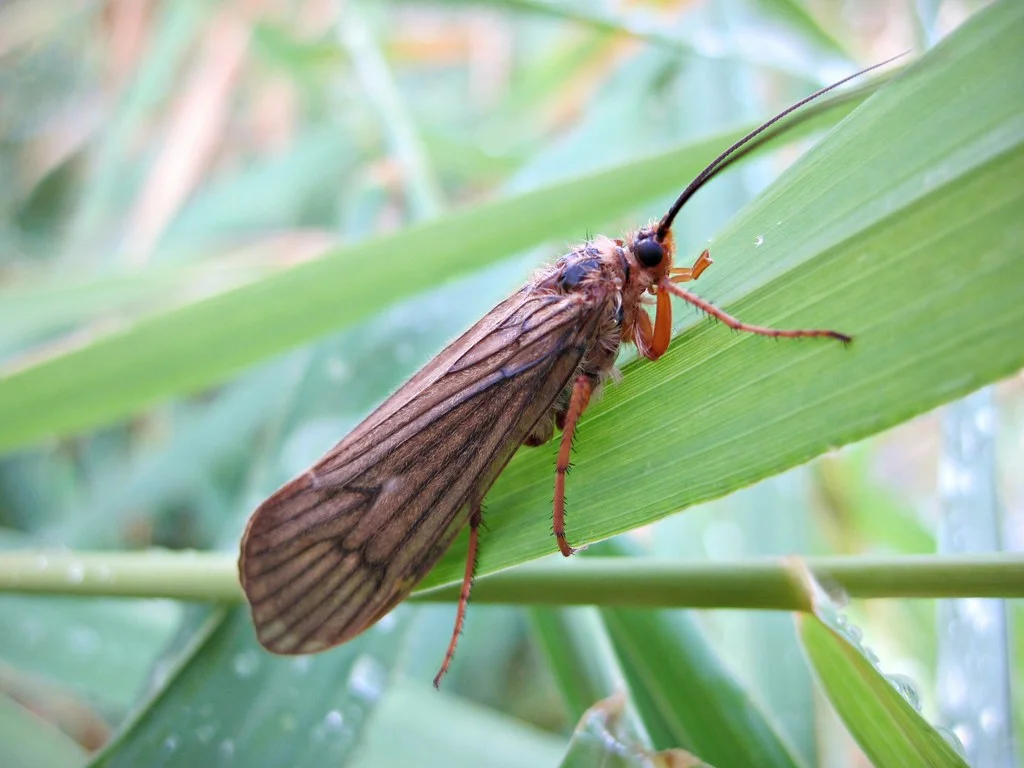
Caddis
The evening hatch
When the mayfly crowd goes home, caddis fishing gets started.
Key species
Hook sizes
Season
The other hatch
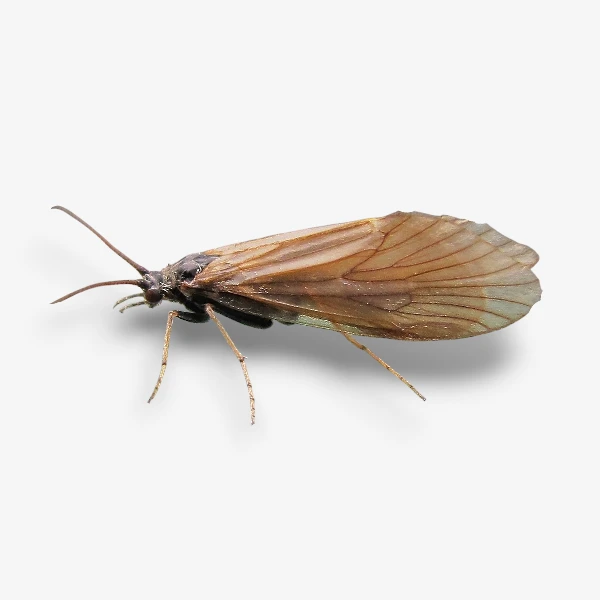
Fly fishing culture is built around mayflies. The literature, the fly patterns, the obsessive entomology — most of it traces back to a mayfly hatch on some storied piece of water. Caddis don't get the same treatment. They hatch in chaos rather than elegance. Their rise forms are messy. Their behavior on the water is erratic. They skitter and flutter and dive rather than drifting serenely in the current.
This is exactly why they're worth understanding.
Caddis are the most abundant aquatic insect on many trout rivers. They hatch across a longer season than most mayflies. They produce surface feeding that's aggressive, high-energy, and sometimes spectacular — the kind of evening fishing that keeps you on the water past dark wondering where the last two hours went. And because most anglers are focused on the mayfly drama, caddis water is frequently underfished.
→ For caddis biology, life cycle, and larva-to-adult stages, see the Caddisflies article in What Fish Eat.
What makes caddis fishing different
Mayfly fishing rewards patience and precision. Caddis fishing rewards aggression and coverage.
When caddis are emerging, fish are not holding in a lane and sipping. They're moving, crashing, chasing. An adult caddis that reaches the surface and starts fluttering before it can escape is a target that triggers a committed strike. The fish don't inspect caddis the way they inspect a PMD dun. They eat them before they get away.
This changes the approach fundamentally. Dead-drift is still productive — particularly for pupa imitations swung just below the surface — but a slight drag on an adult pattern, a controlled skitter that mimics a fleeing insect, often outperforms the dead-drift presentation that works for mayflies. Anglers who've trained themselves to fight drag instinctively need to override that instinct on caddis evenings.
Caddis fishing often gets better as light fails. The peak of a caddis emergence is frequently in the last hour of daylight and the first thirty minutes of dark. The angler who leaves when they can no longer see their fly clearly is leaving the best fishing of the evening.
The key hatches
Mother's Day Caddis (Brachycentrus spp.) is the signature spring caddis event on Rocky Mountain rivers, named for its timing in early to mid-May on many Colorado, Wyoming, and Montana waters. The emergence can be extraordinary — rivers carpeted with caddis adults in the evening, fish crashing in a chaos of rises that looks nothing like a mayfly hatch. It rivals the Salmonfly in productivity on rivers where both occur, and attracts far less attention.
Spotted Sedge (Hydropsyche spp.) is the workhorse caddis — widely distributed, summer-long, and responsible for the consistent evening caddis activity that runs through most of the trout season on freestone rivers. Tan to olive, sizes 12-16, emerging from late afternoon through dark. If you're on a freestone river in summer and fish start crashing the surface at 7 PM for no obvious reason, Spotted Sedge is the first thing to consider.
Little Black Caddis (Chimarra spp.) hatch in early spring on many rivers — sometimes as early as February on tailwaters — and can be the first significant surface feeding opportunity of the year. Small (sizes 16-18), dark, and easy to miss if you're not looking. On tailwaters where midge fishing has been the winter staple, an early Little Black Caddis emergence can produce unexpectedly good dry fly fishing.
October Caddis (Dicosmoecus spp.) hatch in late summer and fall — large, orange-brown caddis (sizes 8-10) that produce aggressive feeding on freestone rivers. The October Caddis on the Deschutes is the most famous example.
Where to find caddis
Unlike some destination-only hatches, caddis are broadly distributed. Almost any healthy freestone trout river has caddis populations worth fishing. The question is less which famous river and more timing the evening window on the water you already planned to fish.
West
Deschutes River
Oregon
When
May (Mother's Day), late summer (October Caddis)
Notes
Premier caddis river in the West; two distinct major caddis events per season.
Colorado
When
May, summer evenings
Notes
Strong Mother's Day Caddis; consistent Spotted Sedge through summer on Gold Medal water.
Montana
When
Summer evenings
Notes
Reliable evening caddis through summer; continues after PMD and stonefly seasons wind down.
Idaho
When
Summer evenings
Notes
Often overlooked because of mayfly reputation; stay after 7 PM.
East
New York / Pennsylvania
When
May through June
Notes
Exceptional spring caddis; Eastern hatches underreported relative to quality.
Broadly
Most freestone rivers
Regionwide
When
Late afternoon to dark, spring-fall
Notes
Carry tan and dark brown caddis in sizes 12-18; fish evenings on any healthy river.
How to fish it
Swing the pupa
The rising caddis pupa — ascending quickly from the bottom to the surface to emerge — is often the most heavily eaten stage during a hatch. A soft-hackle wet fly swung across the current and allowed to rise through the water column at the end of the swing is one of the most productive presentations in fly fishing. Cast across, mend upstream to let the fly sink, let it swing through the current, and hold as it rises at the end. Takes are often aggressive.
Fish the skitter
On adult caddis patterns, dead-drift works but adding a controlled skitter can trigger fish that ignored the natural drift. A slight upstream twitch that causes the fly to dart one to two inches, then settle back, imitates a caddis trying to escape the surface film. Do it deliberately, not randomly, and watch what happens.
Cover water
Caddis fishing is not a single-fish game. During a good caddis evening the fish are spread out, moving, feeding opportunistically. Work through a run or riffle systematically rather than anchoring on one rising fish. Cast to where you last saw a rise, drift through, move a few steps, repeat.
Stay later than feels right
The peak of most caddis emergences happens in low light or darkness. Carry a headlamp, tie on your evening fly before you need to, and give yourself permission to fish until you can't see the bank. The fish don't stop eating when you get uncomfortable.
Fish the egg-laying return
Many caddis females return to the water to deposit eggs, dipping or dragging their abdomens along the surface. This creates a second surface feeding window, often quieter than the main emergence, in the last light of evening. A wet fly or soft hackle fished just below the surface during this period picks up fish that have stopped responding to dries.
What to carry
Adults
- Elk Hair Caddis, sizes 12-18, tan and dark brown — the standard; still hard to beat
- X-Caddis, sizes 14-18 — sits lower in the film; better during active emergence
- Goddard's Caddis, sizes 14-18 — excellent silhouette; floats naturally
- Stimulator, sizes 10-14 — covers caddis and stonefly in faster water
Pupae and wet flies
- Guides Choice Hares Ear, sizes 14-18 — swing it, don't drift it
- Partridge and Orange, sizes 14-16 — classic wet fly; produces during caddis emergences
- Lafontaine Sparkle Pupa, sizes 14-18 — specific caddis pupa imitation; highly effective
Tippet
4X to 5X. Caddis fishing is not delicate work — fish are not scrutinizing the leader in the same way they do during a PMD hatch. Go heavier than you would for mayfly fishing and you'll land more fish before dark.
The evening payoff
Caddis fishing is not the hatch you read about in the classic fly fishing books. It doesn't have the elegance or the mystique. What it has is fish — active, aggressive, willing fish — in the hours when most anglers are already back at the truck.
If you're regularly leaving the river at 6 PM, you're leaving before the best fishing of the day on most summer evenings. Stay until dark at least once. You'll see what everyone who fishes caddis seriously already knows.