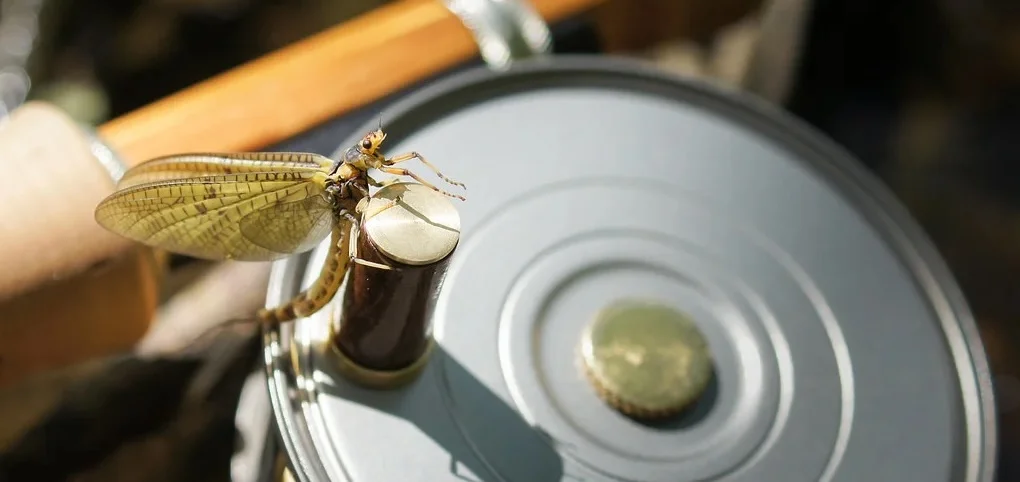
Some hatches you fish because you're there. Others you go there to fish. This is about the second kind.
The Difference Between a Hatch and an Event
Most days on the water involve hatches in the background — midges in the morning, a few caddis in the evening, maybe a PMD if the timing is right. These are the ordinary rhythms of a trout river, and fishing them well is its own satisfaction. You read the rise, match the stage, catch fish. Good day.
Then there are hatches that are something else entirely. The river changes when they happen. Fish that haven't shown themselves in weeks materialize in feeding lanes. The surface comes alive in a way that makes you stop casting and just look for a moment. Other anglers appear from nowhere. The local fly shop runs low on specific patterns. People drive four hours.
These are events, and they happen on a calendar. Not a precise calendar — the river doesn't care what your schedule looks like — but a rough one that repeats year after year, driven by water temperature, elevation, and the biology of insects that have been doing this for longer than fly fishing has existed.
Understanding that calendar, and building your season around the events that matter to you, is one of the more satisfying things you can do as an intermediate angler. It turns a collection of fishing days into something with shape and intention. You stop showing up and hoping. You start arriving for things.
This guide walks through a full year of significant hatches — what they are, where they happen, and what it takes to be there when they do. Each hatch covered here has its own deeper article. This is the map. The leaves are the territory.
What Makes a Hatch Worth a Trip
Not every hatch clears the bar. There are hundreds of aquatic insect species on any healthy trout river, and most of them produce fishing that ranges from decent to good. The ones worth planning around share a few specific qualities.
Density. The hatch produces enough insects to trigger broad, sustained feeding rather than scattered opportunistic rises. When a major hatch is going, most of the catchable fish in a given stretch are actively eating.
Duration. Not just a fifteen-minute window, but an emergence that builds, peaks, and tapers over hours — sometimes over days. Enough time to figure out what's happening, adjust your approach, and actually fish it.
Fish behavior. The best hatches change how fish act. Trout that are normally cautious and deep become visible and aggressive. Large fish that feed primarily at night move into positions you can actually cast to.
Spectacle. Some hatches are simply extraordinary experiences — the kind you describe to other anglers for years. The Salmonfly on a major Western river. A Hex night on the Au Sable. A Green Drake afternoon on the Henry's Fork. These aren't just fishing. They're reasons to be a fly fisher.
The hatches in this guide meet all four criteria. Some are more technically demanding than others. Some require more planning, more travel, or more flexibility. All of them are worth it.
The Insect Orders: A Brief Orientation
The significant hatches divide across three insect orders, plus one outlier. Understanding the basic differences helps you know what you're fishing before you get into the species-level detail.
Mayflies (Order Ephemeroptera) are the central insect in fly fishing, full stop. They go through incomplete metamorphosis — nymph, dun, spinner — and trout eat them at every stage. The diversity within the order is enormous: species range from size 4 Green Drakes down to size 24 Tricos, from early spring Baetis to late summer Hexagenia. Most of the technically demanding dry fly fishing in the sport involves mayflies.
Caddisflies (Order Trichoptera) go through complete metamorphosis — larva, pupa, adult — and produce a different kind of surface feeding than mayflies. Where mayfly rises tend to be deliberate and rhythmic, caddis rises are often chaotic and aggressive. Evening caddis fishing is some of the most high-energy dry fly fishing available, and the insects are present on more water types than most mayflies.
Stoneflies (Order Plecoptera) are the big ones — literally. The largest species, Salmonflies and Golden Stones, are among the biggest aquatic insects in North America, and their hatches trigger correspondingly dramatic feeding. Stoneflies require clean, well-oxygenated water, which means their presence is a marker of river health. They don't hatch on the water — they crawl to shore and emerge on rocks and vegetation — which concentrates fish along the banks in ways that make the fishing both productive and visually exciting.
Hexagenia is technically a mayfly but deserves its own category in any practical discussion. It's nocturnal, enormous, regionally specific to the upper Midwest, and produces the kind of fishing that becomes a story you tell for the rest of your life.
Early season: The River Wakes Up
The fishing year doesn't start when most anglers think it does. On tailwaters — rivers below dams, where flows and temperatures are regulated year-round — there is no off-season. On freestone rivers, the first significant hatches begin earlier than most people expect, often weeks before the spring crowd arrives.
Midges are the constant. They hatch year-round, including in near-freezing conditions, and on many rivers they're the only game in town from November through March. This isn't consolation-prize fishing — tailwaters with heavy midge populations hold substantial trout that have been eating size 20 insects all winter and have developed opinions about presentation.
Blue-Winged Olives are the first significant mayfly of the year on most trout water. They begin hatching in late February or March on lower-elevation rivers, triggered not by warm weather but by overcast, cool, slightly humid conditions — the kind of day that makes non-anglers stay inside. This is the BWO's defining characteristic and one of fly fishing's reliable pleasures: the worse the weather looks, the better the hatch. BWOs come back in fall with even more intensity. They're a two-season insect, and both seasons reward the angler who knows to show up in weather that doesn't look promising.
Spring: The Season's First Crescendo
When water temperatures climb into the mid-40s and keep rising, the river shifts gear. Fish that have been slow and deep through the cold months become noticeably more active. Insect life accelerates. And on Western freestone rivers, the most dramatic hatches of the year begin to build.
The Stonefly progression is the defining event of Western spring. It moves like a wave upstream as water temperatures rise — the Salmonfly emergence beginning on lower river sections in late April on some Oregon and California rivers, working through the major Rocky Mountain rivers through May and into June, reaching high-elevation headwaters in July. Following this progression is one of fly fishing's most rewarding logistical puzzles.
The Salmonfly (Pteronarcys californica) is the marquee event. Two-inch bodies, bright orange abdomens, clattering around in streamside willows in numbers that make them unavoidable. The Golden Stonefly follows close behind, slightly smaller, longer-running, and in many ways more fishable because the crowds have thinned and the fish haven't been pounded for three days.
Caddis hatches begin in earnest in spring on most trout rivers. The Mother's Day Caddis (Brachycentrus spp.) is the signature event — named for its timing on Rocky Mountain rivers, it can produce evening emergences dense enough to carpet the water.
Green Drakes begin on lower-elevation Eastern rivers by late May. Pennsylvania's Penns Creek sees one of the most significant Green Drake hatches in the country around Memorial Day — wild brown trout in catch-and-release water, rising to large mayflies, with a Coffin Fly spinner fall at dusk that deserves as much attention as the afternoon emergence.
Early summer: Peak Diversity
The window between late May and early July, when water temperatures are in the 55–65°F range and insect activity is at its annual peak, is when the best anglers plan their most important trips. Multiple hatches overlap. Fish are at maximum activity. The days are long.
Green Drakes move west and upward through June. The Henry's Fork Railroad Ranch opens June 15 and the drake hatch typically begins within days — one of the most famous intersections of insect and water in American fly fishing. The Frying Pan and Roaring Fork in Colorado produce drakes from late June through July, with the Frying Pan extending the hatch into October at higher flows. The Madison in Montana sees drakes overlapping with the tail of Golden Stone season, a convergence of large-fly opportunity that's hard to find elsewhere.
PMDs — Pale Morning Duns — become the dominant daily hatch on most Western rivers through June and July. Where Green Drakes are the dramatic event you plan a specific day around, PMDs are the reliable structure that makes a whole summer of fishing. They hatch in the morning and early afternoon, they trigger selective feeding that rewards good technique, and they're present on more water than almost any other mayfly.
Yellow Sallies hatch through June and July on freestone rivers, often overlooked because they're smaller and less dramatic than the big stoneflies. This is a mistake. A Yellow Sally hatch moves fish from deep holding water into shallow, fast runs along the banks, where they eat size 14 yellow attractor patterns aggressively in water sometimes only inches deep.
Midsummer: Heat, Specificity, and the Nocturnal Event
Midsummer on most trout rivers means managing temperature. Water above 68°F stresses trout. The best fishing shifts to the bookends of the day — early morning and evening — and the hatches follow.
Tricos are the signature midsummer morning event on rivers with the right conditions — slow, clear, nutrient-rich water. They hatch from first light and the spinner fall follows quickly, blanketing the surface with size 18–24 spent flies and triggering some of the most technically demanding dry fly fishing of the year. Fish rising constantly, refusing almost everything, in flat water where every flaw in your presentation is visible.
Terrestrials fill the afternoon gap. Grasshoppers, ants, and beetles fall from streamside vegetation throughout summer, and fish along grassy banks eat them opportunistically. The afternoon terrestrial window is often the most fishable part of a hot summer day.
The Hex hatch (Hexagenia limbata) is the outlier in every sense. It happens at night, in June, primarily in Northern Michigan. The insects are enormous. The fish that eat them are large browns that have been largely invisible during daylight hours. The emergence begins after dark, often not peaking until midnight or 1 AM. A Hex night on the Au Sable River near Grayling, Michigan is one of the experiences that separates fly fishers who've been around from those who haven't.
Fall: The Second Season
Fall is underrated. After Labor Day, fishing pressure drops dramatically on most rivers, water temperatures return to the productive range, and two of the best fishing events of the year coincide.
Blue-Winged Olives return with renewed intensity in September and October, hatching most heavily on the cold, overcast days that push casual anglers off the water. The fall BWO emergence on a good tailwater is technical, rewarding, and almost entirely unpressured compared to the same river in July.
Streamer season peaks in fall as large brown trout enter their pre-spawn aggression. Fish that have been feeding selectively on insects all summer shift toward predatory behavior, moving and hunting rather than holding and waiting. October and early November is the best time of year to target a truly large brown trout.
Late terrestrials — hoppers into September, beetles and ants through October — extend the summer bank-fishing game later than most anglers expect.
Planning Around the Calendar
The hatches in this guide are predictable in pattern and variable in timing. The difference between an angler who consistently hits them and one who consistently misses them usually comes down to three things.
- Flexibility. A Salmonfly hatch or a Hex emergence cannot be booked on a fixed date six months out. These events move with weather and water temperature in ways that no one can predict precisely. The anglers who experience them regularly keep their schedules open, watch conditions in real time, and move when the window appears.
- Local intelligence. Hatch charts and general timing windows are starting points. The local fly shop that was on the water yesterday has information no chart can produce — which section is going, what fly is working, whether the hatch came off at 2 PM or 5 PM this week. This is irreplaceable, and it's worth stopping in rather than just checking a website.
- A baseline forecast. Knowing what conditions favor a given hatch — water temperature thresholds, weather patterns that trigger or suppress emergence — lets you interpret real-time data intelligently. IdentaFly's hatch forecast uses water temperature and regional conditions to show what insects are likely active on a given water on a given day. It's not a replacement for local knowledge, but it's what you use before you call the shop — so you arrive at that conversation with better questions.
The angler who combines a forecast baseline, a call to the local shop, and a flexible schedule will fish more significant hatches than the one relying on any single source. The tools exist. The calendar is knowable. The fish will be there.
Where to Go Next
Continue reading our related articles for in-depth information about our favorite hatch events, with species detail, geography, and timing. For insect biology and seasonal forage, see What Fish Eat.
Use Hatch Forecast on the water with How to Read a Hatch so observation matches what you expected before you left home.