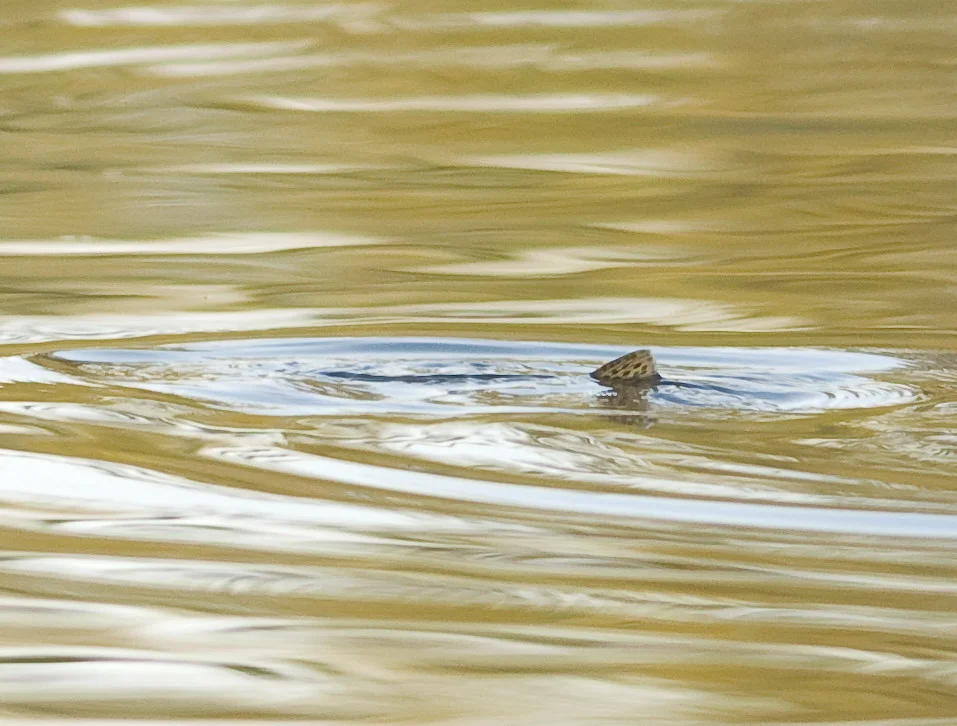
How to Read a Hatch
What the fish is doing matters more than what's hatching.
You're Already Behind When You Get There
Here's a scenario every intermediate angler knows. You pull up to the river, see fish rising, and immediately start digging through your fly box. You're looking for something. Something that matches the situation. But you're not entirely sure what the situation is yet, so you're making educated guesses based on the time of year, what worked last time, and whatever fly is on top of the pile.
Fifteen minutes later you've made a dozen casts with three different flies, spooked two fish, and the rise is still going. The fish are still eating. You're still not catching them.
The problem wasn't your fly selection. It was that you skipped the most important step: actually reading what was happening before you started fishing.
Reading a hatch is a discipline. It takes five to ten minutes when you arrive at the water, it costs you nothing in fishing time, and it improves every decision you make after. Here's how to do it.
Step One: Don't Cast Yet
This is the hard part. You're at the river, there are rising fish, and every instinct says start fishing. Resist it.
Find a position where you can observe the water without wading through the middle of it and put your rod down. You're looking for information, not fish. Give yourself five minutes — ten is better — to just watch.
What you're trying to answer before you tie on a fly:
- Are fish rising, and if so where and how often?
- Is there visible insect activity on or above the water?
- What does each rise form look like?
- What time of day is it and what does that suggest about what should be hatching?
Most anglers answer none of these questions before casting. The ones who do catch more fish.
Step Two: Read the Rise Form
The rise form — the disturbance a trout makes when it feeds — tells you more about what a fish is eating than the insects themselves. Learn to read it and you've got a significant head start.
The sip
A quiet, deliberate ring with barely any surface disturbance. The fish barely broke the surface. This almost always means something in or just below the film — emergers, stillborn duns, or spinners lying flat. It is not eating a high-riding dry fly. If you throw a bushy Stimulator at a sipping fish, you'll get refused every time.
The head-and-tail rise
The nose breaks the surface, then the dorsal fin, then the tail tip — a slow, rolling sequence. Classic emerger or dun feeding. The fish is moving slowly and confidently, which means there's a lot of food and it doesn't need to hurry. Good news: it's not spooky. Bad news: it's probably selective.
The splashy rise
A visible surface disturbance, sometimes with an audible smack. The fish is moving quickly to catch something that's trying to escape. Usually caddis adults or emerging stoneflies. The aggressive take is the fish committing hard before the bug gets away — which means a dragging fly can actually work in your favor here.
The subsurface bulge
No break in the surface, but a visible hump or swirl just below it. The fish is eating nymphs or emerging pupae close enough to the surface to create a disturbance without breaking through. Anglers fishing dries to bulging fish are missing the target by about two inches, which is enough to blank you completely. Drop a soft hackle or emerger just below the film.
The porpoise
A smooth, arcing roll where the fish seems to deliberately show its back. Usually a large fish eating something abundant and unhurried — midges in winter, Trico spinners in summer. Confident. Very selective. This fish has seen a thousand flies and is not impressed.
Matching the rise form to a fly stage matters more than matching the insect species. A fish sipping PMD spinners is doing something fundamentally different from a fish splashing at PMD duns, even though both technically call for "a PMD pattern."
Step Three: Look at the Water Surface
Once you've watched the rise forms, look at what's actually on the water. Get low. Get your eyes close to the surface and look upstream into the current.
Drifting duns
Upright-winged adults floating on the surface. If you can see them, the fish can see them. Note the size and color. A size 16 olive mayfly and a size 18 tan mayfly call for different flies, and that difference matters.
Spent spinners
Much harder to see than duns — they lie flush with wings flat, nearly invisible at low light. Look for a slight iridescent glint on the surface in the evening. If you can't see anything but fish are clearly eating something, spent spinners are a likely explanation.
Shucks
The empty cases left behind when nymphs or pupae hatch. Shucks floating in the film tell you a hatch is happening or recently happened even if you can't see any adults yet.
Clusters
Midges and Tricos often drift in groups rather than as single insects. If you see what looks like a small raft of debris, look closer — it may be a cluster of hatching insects that calls for a cluster pattern rather than a single-fly imitation.
Step Four: Look Away from the Water
Counterintuitive, but important. Once you've scanned the surface, look at everything else.
Streamside vegetation
Adults that have already emerged will rest on bankside grasses, willows, and overhanging brush while their wings dry. Holding one against the sky is the fastest way to confirm size, color, and species group. Stonefly shucks on rocks tell you what's been happening even if you've missed the main emergence.
The air above the water
Spinners mating above the river are the prelude to a spinner fall. If you see clouds of insects dancing in columns over the surface in late afternoon — rising and falling rhythmically — that's the spinner dance, and the fall is coming. Get a spinner pattern ready.
Other anglers
If someone upstream is consistently catching fish and you're not, they've either read the hatch correctly or found the right fly by trial and error. Both are useful data points.
Step Five: Use What You Already Know
Observation on the water is one layer. The other layer is what you know before you arrive — and this is where preparation becomes a genuine advantage.
If you've done any pre-trip homework (water temperature, time of year, what's been reported locally), you should arrive with a hypothesis about what might be hatching. That hypothesis narrows the field dramatically. You're not trying to identify one insect out of hundreds of possibilities — you're trying to confirm or rule out two or three likely candidates.
This is where a hatch forecast earns its keep. IdentaFly's Hatch Forecast uses water temperature, time of year, and river-specific data to tell you what insects are likely active on a given water on a given day. You arrive at the river not with a blank slate but with a starting point: conditions suggest PMDs and caddis are likely right now. Then your five minutes of observation becomes confirmation rather than investigation. You're looking for PMD duns or caddis adults rather than squinting at every insect in the air and trying to place it from scratch.
The forecast doesn't replace the observation. The fish can always surprise you — a hatch running early, a spinner fall you didn't expect, fish keying on something the model didn't predict. What the forecast does is make your observation more efficient.
The local fly shop fills in what no forecast can. A shop that was on the water yesterday knows which specific section is fishing, what fly has been working, whether the hatch came off at 2 PM or 4 PM this week. That's not information any model produces — it's earned by being on the water. The best pre-trip routine is forecast plus shop call, in that order. You call the shop with better questions because you already have a baseline.
Step Six: Match the Stage, Not Just the Species
You've observed the rise forms. You've looked at the surface. You've confirmed your hypothesis. Now you're tying on a fly.
Here's the mistake most anglers make at this step: they match the species and ignore the stage. They see PMDs in the air and tie on a PMD dry fly. But if the fish are eating emergers stuck in the film, the dry fly lands two inches above where the fish are looking. That's close enough to be confusing and far enough to guarantee refusals.
The stage sequence for most mayfly hatches:
- Nymphs rising in the water column — fish the subsurface with a nymph or wet fly
- Emergers stuck in the film — fish a soft hackle, comparadun, or Klinkhammer in the film
- Duns floating on the surface — standard dry fly, high hackle or parachute
- Cripples stuck mid-emergence — a dun pattern trimmed flush, or a specific cripple pattern
- Spinners spent on the surface — flush-riding spent-wing pattern, wings horizontal
During any active hatch, different fish in the same pool can be eating at different stages. The sipping fish in the tailout is probably on spinners or emergers. The fish rising confidently in the riffle is probably eating duns. They require different flies even though they're twenty feet apart in the same hatch.
The Two-Minute Version
Watch before you cast. Watch the rises. Watch the surface. Look at the vegetation. Check the forecast before you leave home and call the shop if the hatch matters enough to drive for. Arrive with a hypothesis, confirm it with observation, match the stage not just the species.
Five minutes of attention at the beginning of a session is worth an hour of trial and error in the middle of it. The fish are going to keep rising. You have time.
Quick reference: rise form → fly stage
- Quiet sip, small ring — Usually: Emerger or spinner in the film. Fish: In or just below the surface.
- Head-and-tail roll — Usually: Dun or emerger. Fish: Surface or just below.
- Splashy, aggressive — Usually: Caddis adult or escaping insect. Fish: Surface, slight drag OK.
- Subsurface bulge — Usually: Nymph or pupa near surface. Fish: Just below the film.
- Slow porpoise roll — Usually: Abundant small food (midges, Tricos). Fish: Film, very selective.
Next: Matching the Hatch — turning what you see into fly choice and presentation.