The First Thing That Hits You
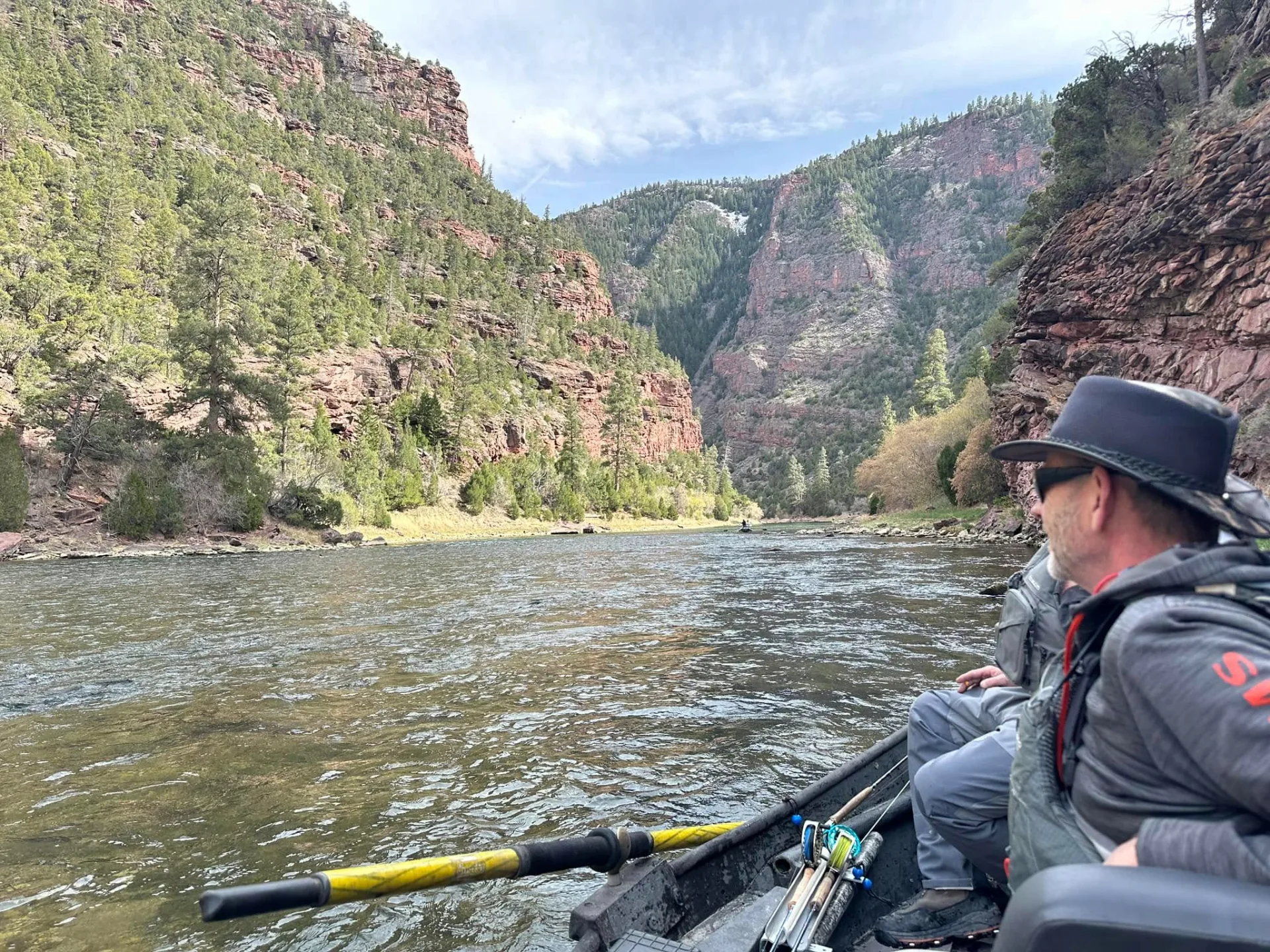
The first thing that hits you isn't the fishing. It's the color.
The water is an impossible shade of emerald green, so clear that you can watch trout slide off the gravel bars or drift beneath your boat twenty feet away. Towering red and tan canyon walls rise above the river on both sides, and except for the occasional drift boat floating through, it feels like you've stepped into another world. The smell in the morning is cool desert air, damp sagebrush, and a hint of river moss — a combination that instantly tells me I'm back on the Green. I've been smelling it since the 1980s and it never gets old.
Early morning light spills over the canyon walls and turns the emerald water into glass. It's one of the most peaceful sights I've ever seen on a river. The sound is quiet — the kind of quiet where you hear the river breathing.
How I Got Here
My introduction to the Green River started with my grandfather. He was a fishing guide on Flaming Gorge Reservoir, and one day he took me below the dam to fish the A Section. I had no idea that trip would shape the rest of my life. Somewhere between watching trout rise, learning to read the water, and listening to his stories, he planted a seed that turned into a lifelong obsession.
Every time I launch at the dam, I still think about those days with him. In many ways, the Green River isn't just where I learned to fish. It's where I fell in love with fishing.
The Water
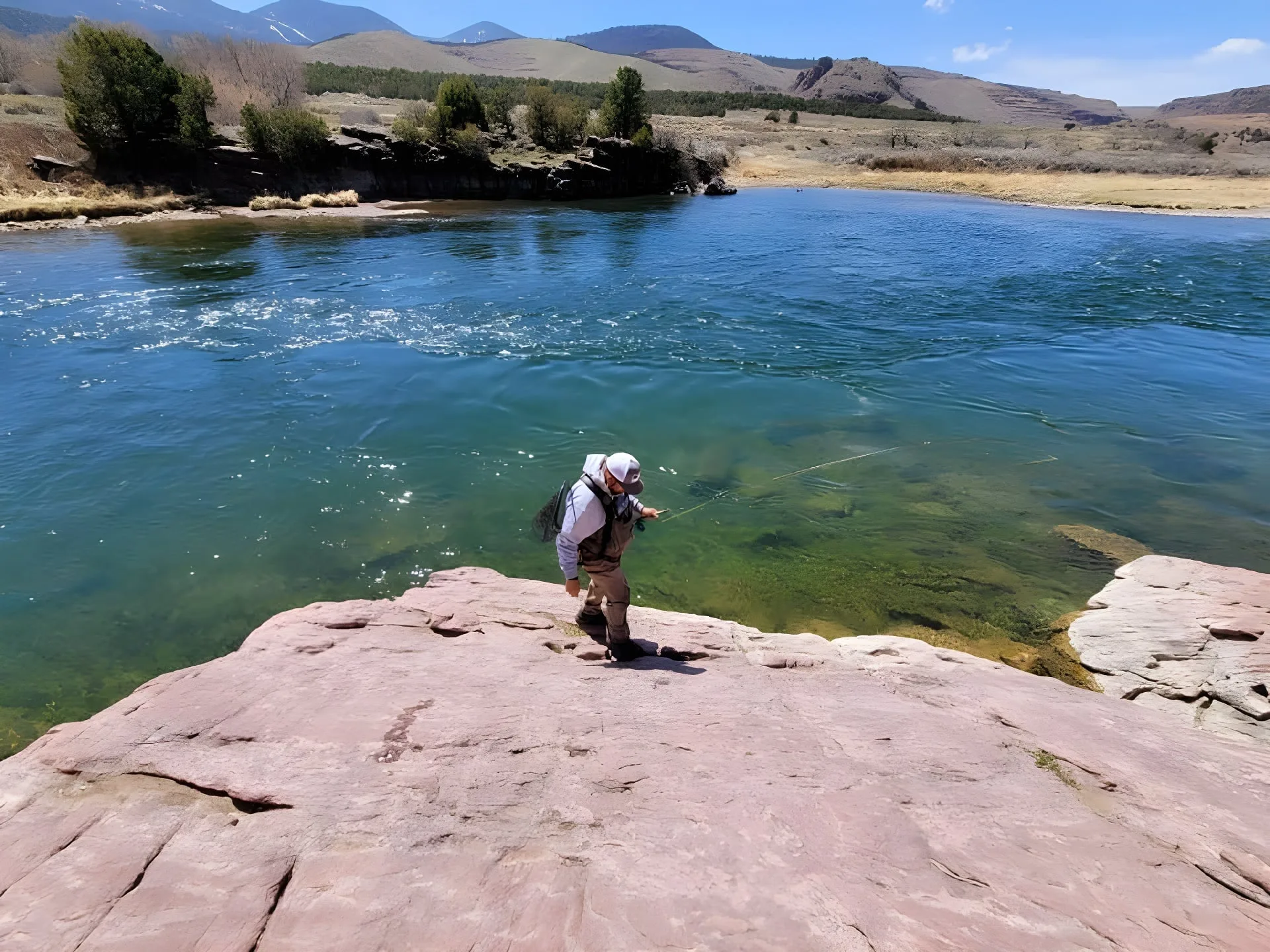
The A Section runs seven miles from the base of Flaming Gorge Dam downstream to Little Hole. Most anglers float it in drift boats, rafts, or pontoons, launching at the dam and taking out at Little Hole. Wade anglers can drive to both access areas, and several trails provide walk-in access to productive water along the way. For a world-class tailwater, the access is remarkably straightforward.
The canyon itself is the thing. It doesn't look like fishing water from the road — it looks like somewhere you'd go to be alone with a large landscape. That's not wrong. The fishing is the reason to come. The place is the reason you keep coming back.
The Fish
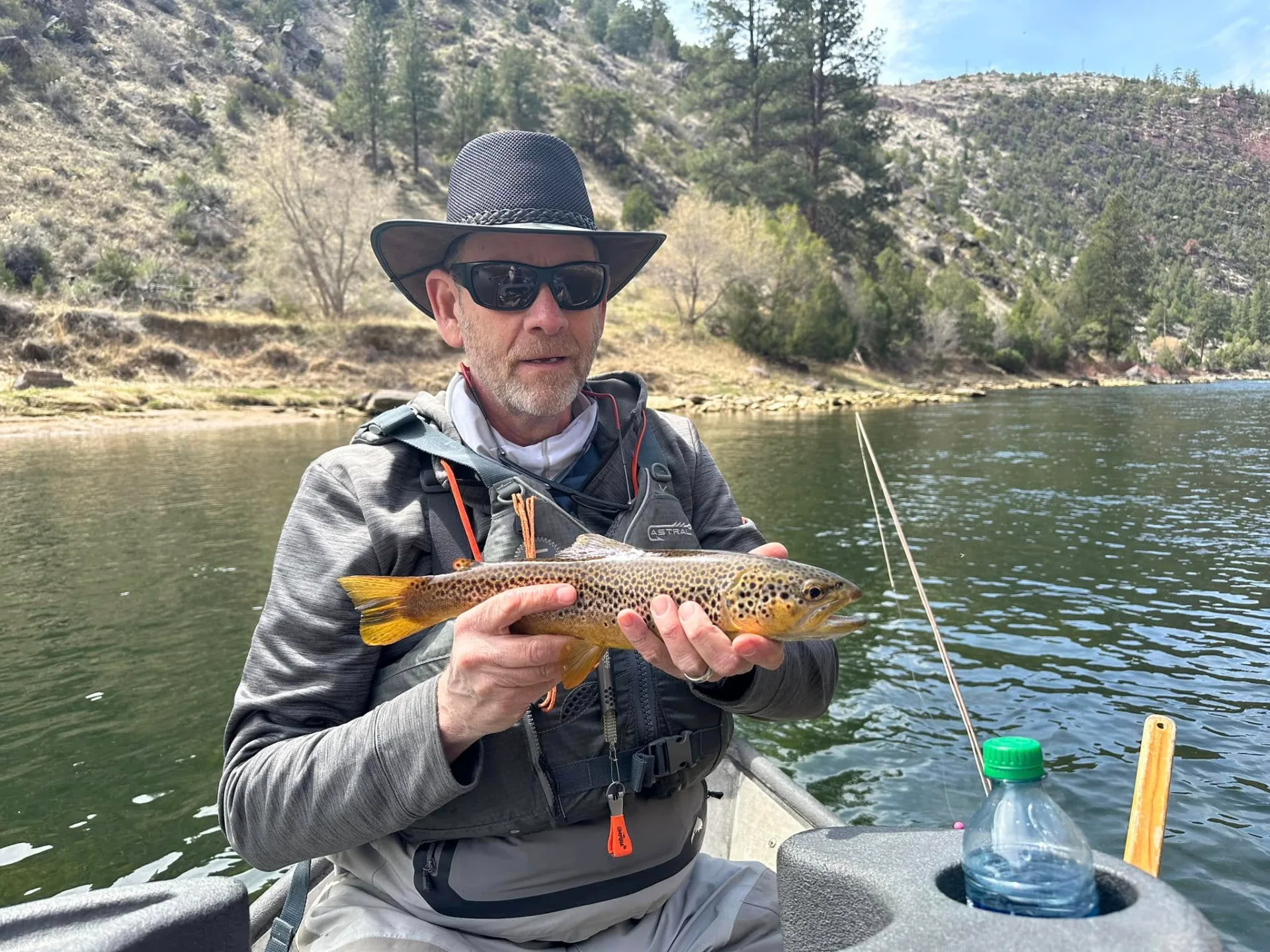
The Green is famous for both rainbow and brown trout, but I'm almost always targeting brown trout. They're challenging, aggressive, and incredibly rewarding to catch. A realistic expectation on any given day is fish in the 15 to 18-inch range, and you'll catch plenty in that range. The fish I get excited about are 20 inches and up. Anything over 24 inches is a true trophy, and it can happen on any given day if you fish smart and stay patient.
I have never had a bad day on the Green.
What the Water Does at Different Levels
The Green fishes differently depending on the release from Flaming Gorge Dam, and understanding that relationship matters more than any other single piece of knowledge you can bring to the river.
During lower flows, trout spread throughout the river and hold in classic runs, riffles, shelves, and long seams. Technical nymphing and dry fly fishing at longer distances are especially productive when the water is low and clear. The fish have room to spread out and they're positioned where you'd expect them.
As the water comes up, the main current becomes too powerful for trout to hold comfortably, and they slide into softer water — along the banks, inside bends, back eddies, the tailouts of runs. High water is one of my favorite times to throw streamers tight to the shoreline, especially for big brown trout that move into the slower edge water to ambush food being swept downstream. After the initial flush of moss and debris clears, high water can produce some phenomenal fishing if you know where to look.
What Takes Years to Figure Out
One of the biggest lessons the Green has taught me came after years of watching what the largest brown trout do during heavy hatches. While everyone else is focused on rising fish in the middle of the river, many of the biggest browns quietly slide into the shallow water along the shoreline. Instead of matching the hatch, I'll tie on a weighted black leech and stalk them like a hunter. Cast several feet upstream of the fish, let the fly sink and drift naturally toward it, then begin slow, deliberate strips as it gets within striking distance. Some of the largest brown trout I've ever caught on the Green have come this way. It's still one of my favorite ways to fish the A Section.
One mistake I see constantly: anglers switching to dry flies too early. Before you join the hatch, spend some time looking along the shoreline. Some of the biggest brown trout in the river are hunting the edges long before they're looking up.
A Lesson from Billy
Many years ago, a friend hired a guide and had an extra seat in the boat, so I tagged along. That guide, Billy, taught me something I'll never forget. During a heavy hatch, instead of trying to match the insects perfectly, he tied on a dry fly two or three sizes larger than what was actually hatching. It made no sense to me at the time, but I watched trout ignore dozens of perfectly matched flies and then confidently eat the oversized imitation. That single lesson completely changed the way I approach dry fly fishing. Decades later, it's still one of the first things I try when fish seem to be refusing the "right" fly.
When to Go
I fish the A Section for the spring BWO hatch and for fall streamers — those are the two seasons I keep coming back for, year after year.
While people love the Cicada hatch here, my favorite is the spring Blue-Winged Olive hatch is one of the most reliable on the river. Overcast, cool days produce the best emergences, and when they're going the fish get up and feed with a consistency that makes the technical presentation work feel worthwhile. This is not the easiest dry fly fishing — the Green educates its trout — but it's among the most rewarding when you get it right.
Fall is streamer season. Pre-spawn brown trout are aggressive and territorial, the canyon is quieter, and a well-presented streamer through the right water finds fish that won't respond to anything else. That's the version of the Green River I look forward to most.
On Crowds
The A Section is one of the most popular trout fisheries in the West. Don't expect solitude on a summer weekend. That said, don't let the number of boats fool you — there's plenty of room to spread out, and the river is big enough that pressure doesn't necessarily translate to difficult fishing.
If you want the river more to yourself, fish in winter, or on weekdays in late fall and early spring. Even during the busy season, launching at first light or staying on the water through the evening spinner fall often gives you long stretches where it feels like you're mostly alone.
Gear
My go-to setup is a 6-weight rod with a weight-forward floating line. I don't baby my tippet on the Green — 3X or 4X is my standard. These trout aren't nearly as leader-shy as many anglers think, and the heavier tippet gives you the confidence to land bigger fish quickly without exhausting them.
Favorite flies: size 16 Parachute Adams for the dry fly fishing, Baby Gonga in black for streamers. And a weighted black leech for the big browns hunting the edges during a hatch.
On the subject of lunch: I don't believe in cold sandwiches. My drift boat has a BBQ, and we do it right — a hot, freshly cooked lunch on the river. After a good day of fishing, there's nothing better than good food, good friends, and a cold beverage while reliving the fish that ate and the ones that got away.
What the Green Has Taught Me
The Green River has taught me that patience and observation will outfish skill almost every time. When I was younger, I thought success came from casting more, changing flies constantly, covering more water. The Green showed me the opposite. Slow down. Watch the river. Watch the trout. Let them tell you what they want before you make your move.
That lesson has carried far beyond fishing. It's shaped how I solve problems, make decisions, and approach life. Every trip reminds me that the best answers usually come to those who are willing to slow down and pay attention.
Why I Keep Coming Back
Because it feels like home. The Green River has been part of my life since I was a kid, and every trip brings back memories while creating new ones. There may be closer rivers, but none have ever captured my heart the way the Green has.
I've had the privilege of taking a lot of people to the Green for their very first trip, and the reaction is almost always the same — they're amazed. The scenery alone leaves an impression, but once they see trout rising everywhere, watch fish through the crystal-clear water, or hook their first Green River brown, they're hooked for life. I've watched experienced anglers become kids again, and beginners catch fish they never thought possible.
It's one of those rare places that exceeds people's expectations every single time.
Quick Facts
- Access
- Launch at Flaming Gorge Dam; take-out at Little Hole (7 miles). Walk-in via trail from Little Hole.
- Species
- Rainbow and brown trout, 15–24+ inches
- Best seasons
- Spring (BWO hatch), Fall (streamers)
- Key flies
- Size 16 Parachute Adams, baby Gonga in black, weighted black leech
- Tippet
- 3X–4X
- Rod
- 6-weight, weight-forward floating line
- Nearest town
- Dutch John, UT
- Local resources
- Flaming Gorge Resort, Red Canyon Lodge