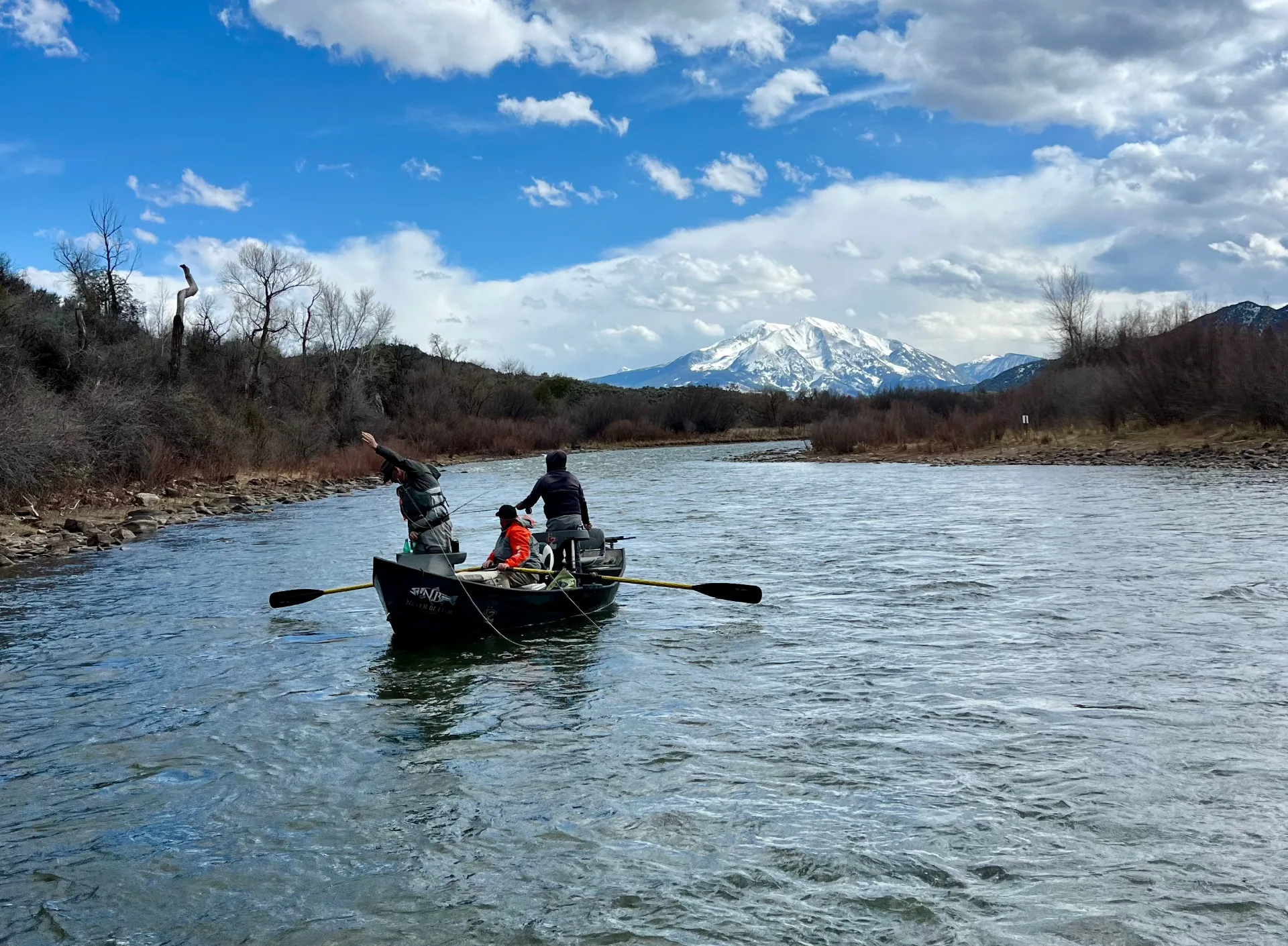
Here's a scene that plays out on Western rivers every summer. An angler wades in at a public access, fishes upstream for a quarter mile, and meets a landowner on the bank. The angler says, "It's public water." The landowner says, "You're standing on my dirt." Depending on the state, either of them could be right.
Stream access is one of the most misunderstood parts of fly fishing. The rules change at state lines. Sometimes they change halfway across a river. They've also been shifting in court for the past few years. This guide covers what "public land" actually means, when you can and can't fish private property, and how the rules differ between states. It also covers the question every drift boat angler eventually asks: can I drop anchor here?
A quick note before we start: We're anglers, not attorneys. This guide explains how access works in practical terms, and we last verified it in September 2026. Laws and court rulings change. Always check your state wildlife agency's current regulations before you fish new water, and treat this as a starting point, not legal advice.
What Is "Public Land"?
"Public land" is land owned by a government, whether federal, state, or local, and held for public use. For anglers, the main types are:
- National Forests (U.S. Forest Service): Some of the best trout water in the country runs through National Forest land. It is generally open to fishing with a valid state license.
- Bureau of Land Management (BLM) land: This is mostly in the West and is also generally open to fishing. It covers many high-desert tailwaters and canyon stretches.
- National Parks: These are open to fishing, but they often have their own rules. Some parks, like Yellowstone, require a park-specific fishing permit instead of a state license.
- National Wildlife Refuges: Fishing is allowed only where the refuge has specifically opened it. Assume a refuge is closed until you confirm otherwise.
- State lands: These include state wildlife areas, state game lands, state parks, and state forests. Most allow fishing under state rules.
- State trust lands: Be careful here. States hold these lands to generate revenue, not for recreation. In some states, including Colorado, trust land is closed to the public unless the wildlife agency has leased it for access.
Some land that looks public is not. Tribal lands are sovereign, and fishing there requires a permit from the tribe, not the state. Municipal watersheds, utility reservoirs, and military land can have their own restrictions or be closed entirely.
Public land vs. public water
This is the distinction that trips up most anglers. Public land is about who owns the ground. Public water is about who has the right to use the water flowing over it.
In most Western states, the water itself belongs to the public. The riverbed under that water, however, often belongs to whoever owns the land on either side. So the water can be public while the gravel under your boots is private. That split between water and streambed runs through almost every access question in this guide.
Can I Fish Anywhere That's "Public"?
Mostly, but not always. Three things can stop you.
- You have to be able to reach it legally. A public parcel surrounded entirely by private land, called landlocked public land, doesn't help you if the only way in is across a private ranch. Millions of acres of Western public land are landlocked this way. Crossing private land to reach public water is trespass in every state, even in states with generous stream access laws.
- "Public" doesn't override fishing regulations. Seasonal closures, spawning closures, catch-and-release sections, artificial-only rules, and hoot-owl restrictions during hot, low water all still apply. Being on public land doesn't exempt you from any of them.
- Some public land is closed to fishing. This includes refuges that haven't opened fishing, trust lands without an access agreement, and certain reservoirs and municipal properties
What about corner crossing?
In the West, public and private land often alternate in a checkerboard pattern, where two public squares touch only at a single corner point. For decades, stepping diagonally from one public square to the next was a legal gray area.
In March 2025, the Tenth Circuit Court of Appeals ruled in Iron Bar Holdings v. Cape. It held that hunters could cross at the corner between public parcels as long as they didn't physically touch the private land. The U.S. Supreme Court declined to hear the appeal in October 2025, so that ruling stands. It covers the six states in the Tenth Circuit: Colorado, Wyoming, Utah, New Mexico, Kansas, and Oklahoma.
In other states, including Montana, Idaho, and Nevada, corner crossing is still legally unsettled. Montana lawmakers are drafting legislation on it for the 2027 session. Outside the Tenth Circuit, don't assume corner crossing is safe.
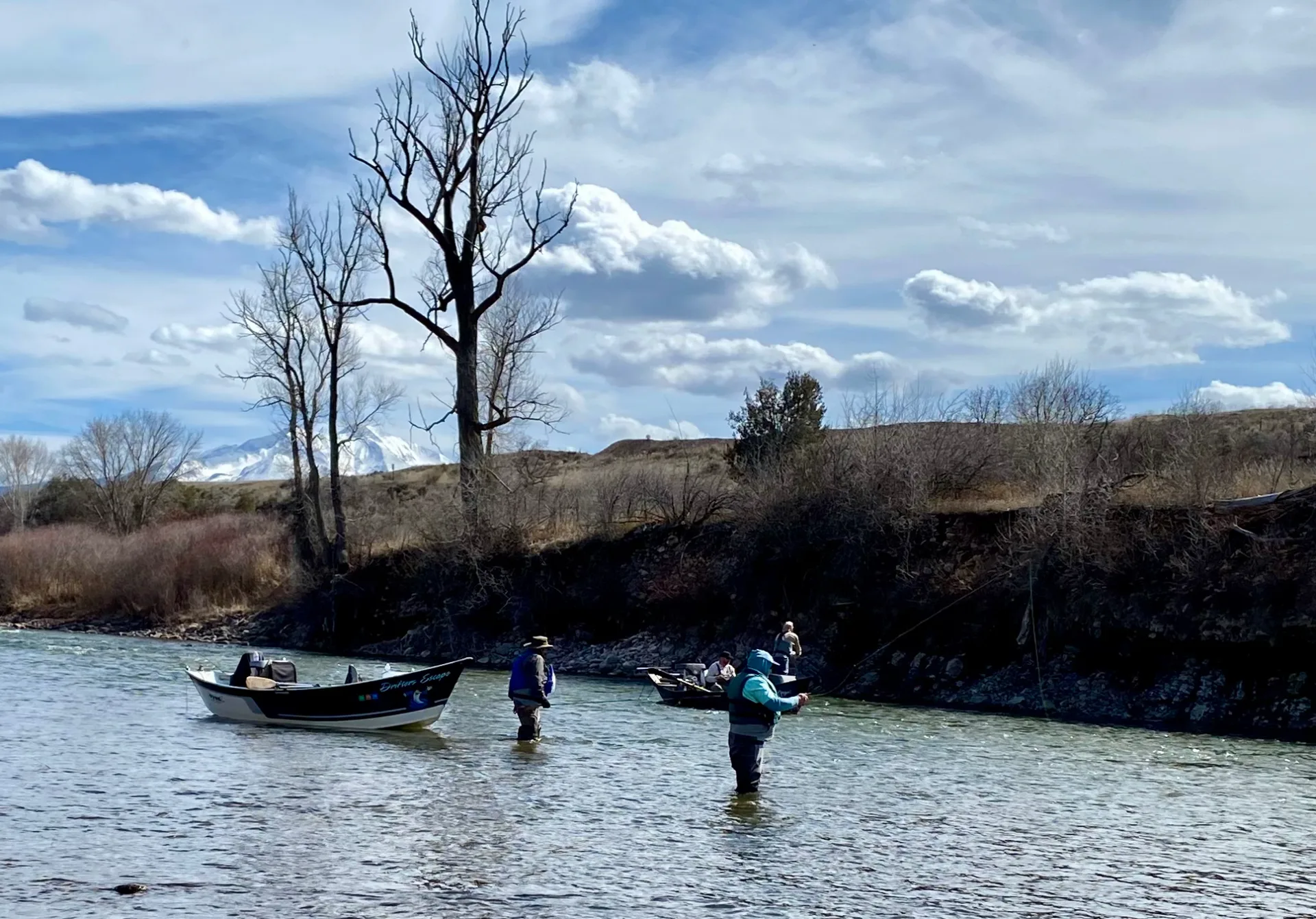
Can I Fish Private Land?
Yes, with permission. That's the whole rule. Here are the most common ways in:
Ask. Many landowners will say yes to someone who asks respectfully. A few things help:
- Knock on the door or call ahead. Don't ask by waving from the river.
- Be specific about when you want to fish, how many people, and where you'll park.
- Offer something back, like a fish report, help with fence repair, or a thank-you note.
- If you get a yes, get it in writing if you can. At least get a name and phone number.
- Leave every gate the way you found it.
Use state walk-in and access programs. Many state agencies pay or partner with landowners to open private water to the public. Examples include Wyoming's Walk-In Fishing Areas, Utah's Walk-In Access program, New Mexico's Open Gate program, Montana's Fishing Access Sites, and Pennsylvania's public fishing easements. These lands usually come with their own rules, such as parking only in designated spots, foot traffic only, or seasonal dates. Read the signs at the access point.
Look for public access easements. Sometimes a state agency or land trust buys the right to fish a stretch of private river without buying the land. These easements are often marked with signs and show up on state fishing maps. Stay within the marked boundaries, and don't wander onto the rest of the property.
Pay for access. Private water leases, fishing clubs, access marketplaces, and guided trips on permitted ranch water are all legitimate options. On some rivers, they're the main way to reach water that would otherwise be off-limits.
What doesn't count as permission: an unposted fence line, an open gate, a road that happens to end at the river, or "everyone fishes there." In many states, private land doesn't have to be posted with signs to be off-limits.
The River Itself: Water, Bed, Bank, and the Anchor Question
Once you're legally in the river, the question becomes what you're allowed to touch. It helps to think of a river in four layers:
- The water column: the water you float on and fish in.
- The streambed: the rocks and gravel under the water. You touch this when you wade, stand, or drop an anchor.
- The banks below the high-water mark: the gravel bars and shorelines that flood during high water.
- Land above the high-water mark: the "dry" land, which is almost always the adjacent owner's private property.
Every state draws the public/private line somewhere in these four layers. A Montana angler can use layers 1 through 3. A Colorado or Wyoming angler floating through private land gets only layer 1. That's why dropping an anchor, which puts steel on the streambed in layer 2, is perfectly legal in some states and trespass in others.
One more detail matters for floaters. When one bank is public and the other is private, the private owner typically owns the bed out to the center of the stream. Anchoring on the private owner's side of that line can be trespass even though the far bank is public.
How to Know Where You Are
Most access problems happen because anglers genuinely don't know where the boundary is. You can fix that before you leave home.
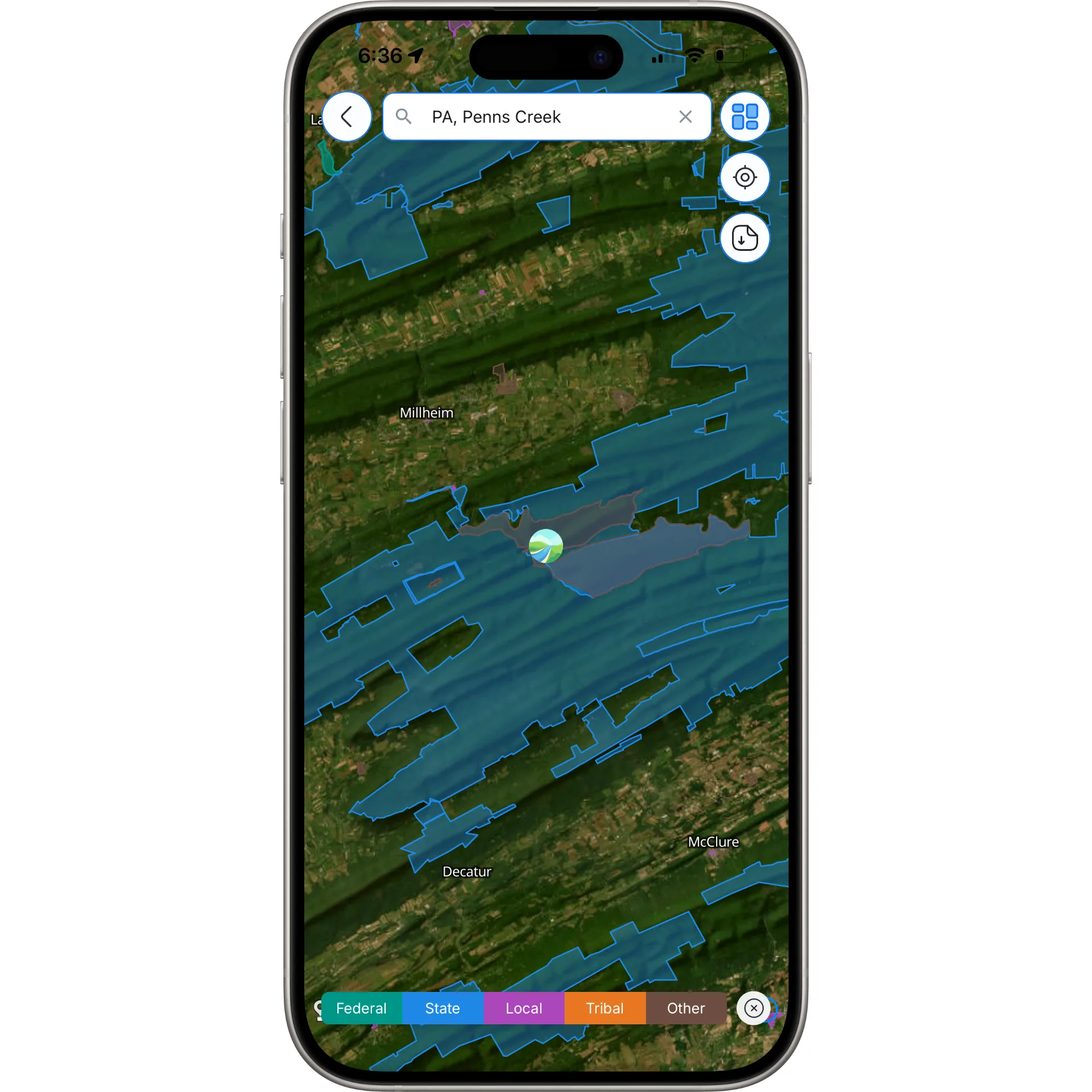
- Land ownership map apps, such as within the IdentaFly app, and other similar tools, show property lines and public land on your phone, and work offline. If you float or fish unfamiliar water, this apps pays for itself because you can see the boundary on your device no mater where you are. Just be sure to download the map to your device before your day on the water.
- State agency maps show agency-managed access: Colorado Parks and Wildlife's Fishing Atlas, Montana FWP's Fishing Access Sites, Wyoming's Walk-In Fishing Areas, and Pennsylvania Fish and Boat's access maps.
- BLM and Forest Service maps show federal land boundaries and are free.
- Local fly shops know which stretches are sensitive, which landowners are touchy, and which easements are marked poorly. Ask them.
Once you know you're legal, plan the rest of the day. IdentaFly's water pages pair locations with USGS flow and temperature, and the hatch forecast helps you decide which public stretch is worth the walk.

Access Etiquette: Keeping the Water Open
Access is fragile. Many of the easements, walk-in agreements, and informal permissions anglers rely on exist because a landowner decided anglers were good neighbors. They can disappear the same way.
- Park only in designated spots, and never block gates or driveways.
- Leave gates as you found them, whether open or closed.
- Pack out your trash, plus some of someone else's.
- If a landowner confronts you, stay calm. Explain where you entered, and leave if you're unsure of the law. An argument on the riverbank has never won anyone access.
- Don't post the exact location of a sensitive easement on social media.
- Support organizations that work on access and habitat, such as Trout Unlimited chapters, Backcountry Hunters & Anglers, and your state's stream access coalition.
Quick Answers
Is all water in a National Forest public?
Generally, yes, if you can reach it legally. Watch for private inholdings, which are private parcels inside forest boundaries. River corridors are a common place to find them.
Can I wade anywhere as long as I got in at a public access?
In Montana and New Mexico, generally yes, within the stream corridor. In Colorado, Wyoming, and Utah, no. Once the bed turns private, you need permission.
Can I drop anchor while floating?
Over public land, yes. Over a private streambed, it depends on the state. It's allowed in Montana and on Pennsylvania's navigable rivers. It's trespass in Wyoming, and you should treat it as trespass in Colorado and Utah.
What if there's no "No Trespassing" sign?
In many states, private land doesn't need signs to be off-limits. No sign is not the same as permission.
What if a fence crosses the river?
A fence doesn't automatically mean the water is closed. In states where floating is legal, you can usually make a short portage around it. Don't cut or damage it. If the fence or its signs seem to be blocking lawful access, report it to your state wildlife agency.
How do I find out if a river is "navigable"?
Check your state wildlife agency's access or regulations page. Navigability is a legal determination, so if an agency page doesn't list a river, assume it isn't navigable.