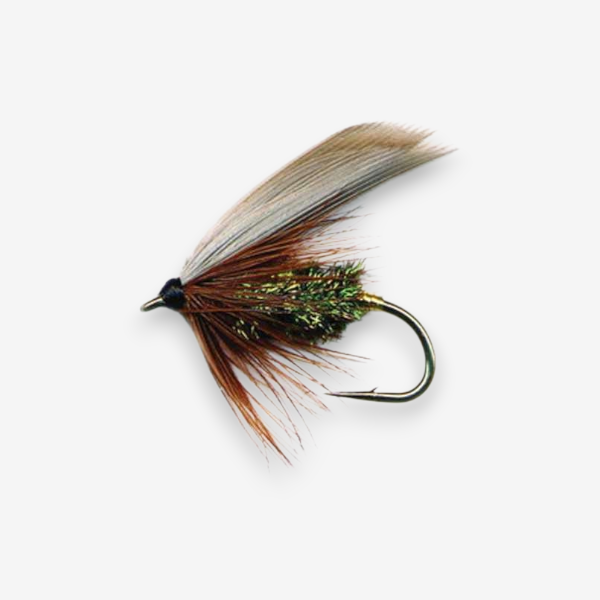
Leadwing Coachman
0 / 5
(0 Reviews)
Description
The Leadwing Coachman originated in England during the early 1800s as a darker variation of Tom Bosworth’s original Coachman wet fly. Bosworth replaced the Coachman’s white duck-quill wings with gray mallard or starling feathers, producing the muted, lead-colored wing that gives the pattern its name. Originally intended for low-light and nighttime fishing, it remains an effective imitation of emerging caddisflies and other dark-bodied aquatic insects.
Curated by the IdentaFly fly fishing team.
Pro Tip
Fish the Leadwing Coachman across a shallow riffle and deliberately allow the wing to become waterlogged. The saturated gray wing turns darker and slightly translucent, closely resembling the folded wing of a caddis pupa rising toward the surface.


Reviews
0
0 Ratings
0 Reviews
Fly Tying Recipe
- Hook: Standard dry-fly hook, Dai-Riki 305 or equivalent, #10–14
- Thread: 6/0 or 140-denier, black
- Tag: Medium gold or silver tinsel
- Rib: Fine gold wire
- Body: Peacock herl
- Hackle: Speckled brown hen hackle
- Wing: Matched mallard-wing feather segments
Fly Tying Video
From: Tightline Video