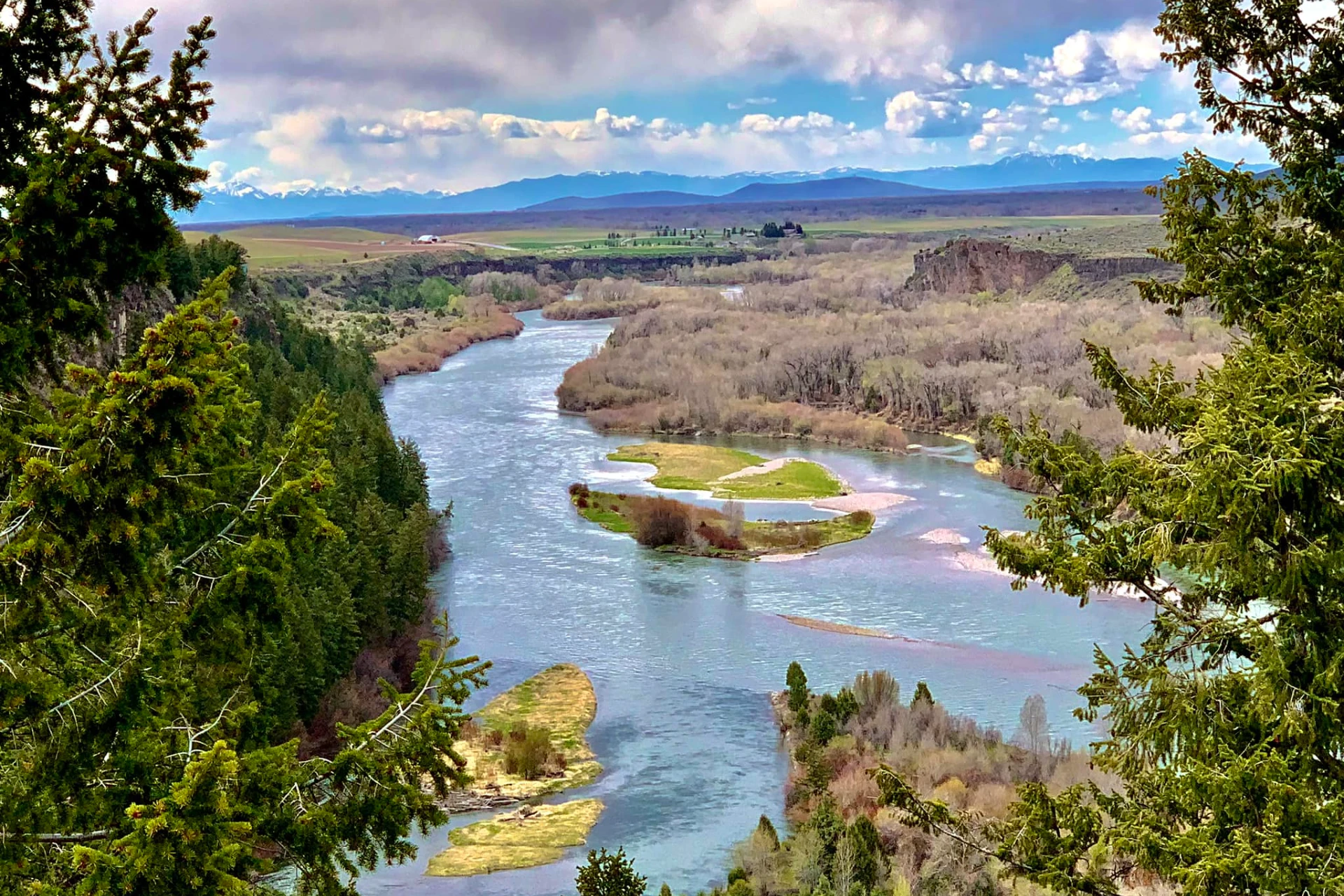
Snake River
ID
•
River
•
Main stemAbout Snake River
The Snake River in Idaho offers a substantial tailwater fishery below Palisades Dam. This stretch runs clear and cold, averaging about 150 feet wide through much of its course, though it widens in sections. You'll find a mix of riffles, runs, and deep pools, with plenty of submerged rocks and gravel bars creating prime holding water for trout. The banks are generally accessible, with a mix of open meadows and some brushy sections, and boat access is common, allowing anglers to cover more water efficiently. Look for indicators to signal depth changes and consider seams where faster water meets slower water. Downstream of the dam, the Snake River is known for its healthy population of rainbow and cutthroat trout, with brown trout also making a strong showing. Expect good hatches of caddis and stoneflies throughout the warmer months, and smaller mayflies like Blue-Winged Olives will also be present. When the insects are active, dry fly fishing can be excellent, especially in the faster riffles and along the edges of seams. For subsurface action, nymphs like Pat's Rubber Legs or Prince Nymphs, fished tight to the bottom, will often produce. Streamers, particularly olive or black Woolly Buggers, can be effective for picking off larger trout, especially during lower light conditions in the early morning and late evening. Be mindful of other anglers and give them space. Further down, the river opens up into wider, slower sections with more complex structure. Here, you'll find deeper channels, drop-offs, and areas with submerged timber. This is prime territory for larger brown trout and can be worked effectively with both nymphs and streamers. Consider fishing near inlets and points where food sources might concentrate. During the morning and evening hours, when light is low, large streamers can trigger aggressive strikes. When nymphing these deeper sections, focus on getting your flies down quickly to the bottom, using split shot and heavier flies. The Snake River is a big water fishery, and covering water effectively is key to success.
Access
Seasons
Terrain
Water
Fish Species
Trout
Rainbow Trout
Fishing Styles
USGS Water Conditions
Water conditions for the last 7 days. You can gain insights to fishing activity based on these conditions, like water temperature and flow.
Data sourced from the USGS National Water Information System
Methods
•
Drift Boat Only
Land Ownership
National Park
Public Blm
Trip Planning
Best fishing typically occurs during spring and summer. Check water conditions before heading out.
See what insects are emerging on Snake River's hatch forecast — including active hatches, water temperatures, and which patterns to have in your box this month.