March Brown Gray Fox
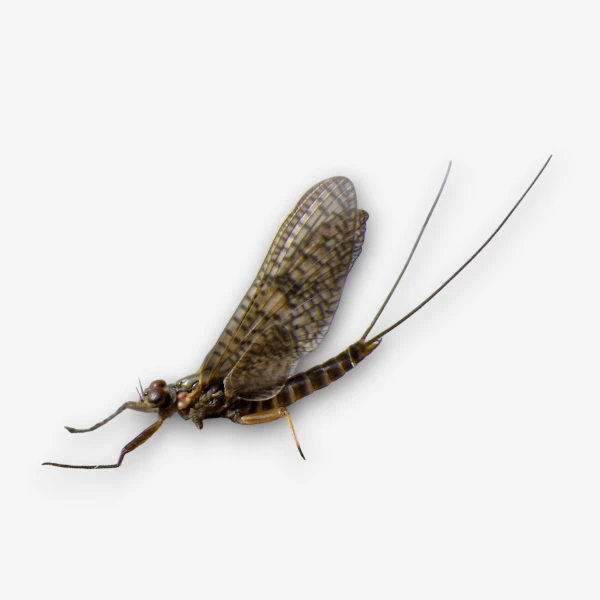
Adult coloration
Bronze
Brown
Active water temp
48-58°F
Description
Overview The March Brown—one of the earliest and most anticipated mayfly hatches across North America—appears in both Eastern and Western forms, each sharing the same general size and timing but showing distinct regional differences in color and behavior. All March Browns are medium-to-large mayflies emerging in early to mid-spring, usually from late March through April, and they offer trout some of the first consistent surface feeding opportunities after winter. Eastern March Browns tend to have lighter tan or pale brown bodies with soft gray-mottled wings, while Western March Browns are typically darker, often showing richer brown bodies and more defined mottling in the wings. Regardless of region, March Browns emerge sporadically—often one here, one there—rather than in dense clouds, making them a “searching” hatch where trout still look for them eagerly. Most imitations are tied on sizes 10–14, matching the fairly large natural.
Nymph March Brown nymphs (both Eastern and Western) are strong clinger nymphs that live among the rocks and cobble of fast water. They are around an inch long and have a rugged, segmented appearance. Western March Brown nymphs usually show darker olive-brown tones with a pronounced thorax, while Eastern nymphs often carry light olive to tan-brown shading with a more subdued thorax. All versions migrate toward shallower, broken water just before emergence, crawling along the substrate in riffles and adjacent seams. Because of their size, nymph imitations in sizes 10–14 are standard and effective both before and during the hatch.
Dry / Dun / Spinner Adult March Browns share the same general shape—a medium-sized mayfly with upright wings and a tan-to-brown body—but regional differences matter when matching naturals. The Eastern March Brown dun commonly exhibits a lighter tan body with gray or light-mottled wings, while the Western March Brown dun often shows a slightly darker brown body and richer mottling in the wings. Both forms emerge in early spring, often during the middle of the day when water warms, and their slow, deliberate takeoff makes them easy prey for trout. Spinners for both forms are more delicate, typically with light brown bodies and clear gray wings. Dry-fly and spinner imitations tied on sizes 10–14 match the natural insects well.
Curated by the IdentaFly fly fishing team.
Interactive Hatch Chart
Subscribe to view hatch locations. Hatch data is available for all species.
Check the live hatch forecast to see where March Brown Gray Fox, and other species are emerging right now and which patterns are working.


